
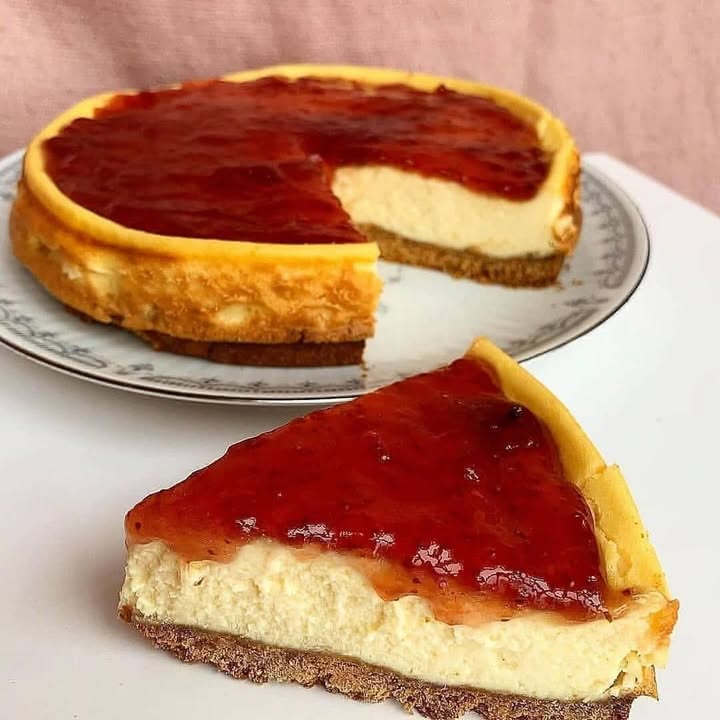
Ma quête du parfait Cheesecake Fraise Gourmand
Vous est-il déjà arrivé de goûter un dessert qui ressemble à un câlin ? Pour moi, c’est une part de cheesecake crémeux et onctueux, surtout mon Cheesecake Fraise Gourmand fait maison. Je me souviens d’avoir tenté d’en faire un pour l’anniversaire de mon mari il y a des années. Il avait craquelé sur le dessus, il s’était affaissé au centre… c’était un délicieux désastre. Mais après de nombreux essais, quelques larmes de joie et beaucoup de cream cheese, j’ai enfin trouvé la combinaison gagnante. Cette recette est ma petite victoire, que je partage avec tout l’amour et les astuces glanés en chemin.
Une tranche d’histoire du cheesecake
L’histoire du cheesecake est aussi riche que son goût ! Saviez-vous que les Grecs anciens en servaient une version aux athlètes lors des premiers Jeux Olympiques ? Bien sûr, ma recette avec sa garniture à la confiture de fraises est bien loin du miel et du blé d’antan. Ce Cheesecake Fraise Gourmand marie l’indulgence crémeuse du style New-Yorkais classique avec une simple touche fruitée à la française. C’est un classique moderne né dans ma propre cuisine, parfait pour les gourmands d’aujourd’hui.
Pourquoi vous allez adorer ce cheesecake facile
Vous allez adorer cette recette parce qu’elle est d’une simplicité trompeuse. Elle utilise des ingrédients du quotidien pour créer quelque chose de vraiment luxueux. La texture est sublime – incroyablement lisse et riche, avec ce délicieux contraste apporté par le croustillant du fond sablé. La confiture de fraises ajoute une note fruitée et lumineuse qui équilibre parfaitement l’onctuosité. C’est un dessert qui impressionne et qui murmure “je suis pâtissier”, alors que c’est juste vous et un saladier en train de vous amuser.
Quand servir votre cheesecake gourmand
Ce cheesecake est votre arme secrète pour les célébrations. Il rend n’importe quel jour extraordinaire. Voici quelques occasions parfaites :
- Déjeuner dominical en famille : La finale grandiose qui fait parler tout le monde.
- Anniversaires : Bien plus personnel et impressionnant qu’un gâteau acheté.
- Dîners entre amis : Un succès garanti que vous pouvez préparer à l’avance.
- Juste comme ça : Certains jours ont simplement besoin d’une part de bonheur crémeux.
Réunir vos ingrédients pour le Cheesecake Fraise Gourmand
Rassemblons nos trésors ! Pour un gâteau parfait de 20 cm de diamètre, il vous faudra :
- Pour le fond : 150 g de biscuits natures (type petit beurre ou biscuits Graham), 80 g de beurre fondu.
- Pour la garniture crémeuse : 400 g de cream cheese entier (température ambiante !), 160 ml de crème fleurette (30% de matière grasse), 3 gros œufs, 100 g de sucre blanc, 2 cuillères à soupe de fécule de maïs.
- Pour la garniture sublime : De la confiture de fraises, ou votre confiture préférée.
Substitutions d’ingrédients astucieuses
Pas de panique si il vous manque quelque chose ! Voici des alternatives faciles :
- Biscuits : Utilisez des biscuits digestives, des speculoos, ou même des biscuits Graham écrasés.
- Cream cheese : Le type Philadelphia entier est idéal. Évitez les versions allégées pour la bonne texture.
- Fécule de maïs : Vous pouvez utiliser de la farine tout usage en même quantité.
- Garniture : Des fruits rouges frais, du lemon curd, une ganache au chocolat, ou une simple neige de sucre glace font des merveilles.
Créer votre cheesecake crémeux : étape par étape
Étape 1 : Le fond sablé au beurre
D’abord, créons cette fondation croquante et irrésistible. Écrasez vos biscuits en une fine poudre. Vous pouvez utiliser un robot culinaire ou les enfermer dans un sac et les écraser au rouleau à pâtisserie – parfait pour évacuer un peu de stress ! Mélangez intimement les miettes avec le beurre fondu, bien doré. Le mélange doit se agglomérer quand vous le pressez entre vos doigts. Tassez-le fermement et uniformément au fond de votre moule à fond amovible de 20 cm préalablement beurré. Enfournez maintenant cette base à 180°C pendant 10-12 minutes, jusqu’à ce qu’elle soit légèrement dorée et sente divinement bon. Cette étape “cuit” le fond et évite qu’il ne devienne détrempé. Astuce de pro : Utilisez le fond d’un verre pour tasser les miettes pour une couche parfaitement uniforme.
Étape 2 : La garniture soyeuse au cream cheese
C’est là que la magie opère. Dans un grand saladier, fouettez le cream cheese à température ambiante avec le sucre jusqu’à ce que le mélange soit parfaitement lisse, crémeux et sans le moindre grumeau. C’est crucial pour cette texture veloutée. Ajoutez les œufs un par un, en battant bien après chaque ajout. Le mélange deviendra magnifiquement brillant. Incorporez délicatement la fécule de maïs, puis enfin, versez la crème fleurette froide. Mélangez le tout délicatement jusqu’à obtenir une pâte luxueusement lisse, pâle et coulante. Astuce de pro : Rabattez souvent les bords du saladier pour assurer un mélange parfait.
Étape 3 : La cuisson douce et patiente
Versez la garniture crémeuse sur votre base précuite et maintenant refroidie. Donnez un petit coup sec au moule sur le plan de travail pour libérer les bulles d’air. Placez-le au centre d’un four préchauffé à 160°C. Laissez cuire environ 50 minutes. Le gâteau est cuit lorsque les bords sont pris mais le centre a encore un léger mouvement, une tremblote – comme une gelée prise. Il va se raffermir en refroidissant. C’est le secret pour un centre crémeux ! Astuce du chef : Placez un plat d’eau chaude sur la grille en dessous de votre cheesecake pour créer de la vapeur et éviter les fissures.
Étape 4 : Le rituel crucial du refroidissement
Voici l’étape la plus importante : la patience. Éteignez le four et entrebâillez la porte. Laissez le cheesecake reposer à l’intérieur du four qui refroidit pendant environ une heure. Ce changement de température graduel évite de “choquer” le gâteau délicat et l’empêche de s’affaisser ou de craqueler. Ensuite, laissez-le refroidir complètement sur le plan de travail avant de le placer au réfrigérateur. Laissez-le prendre au moins 4 heures, mais une nuit entière est vraiment idéale. Ce temps de repos permet aux saveurs de se marier et à la texture de devenir parfaitement ferme et tranchable.
Étape 5 : La finale fruitée
Enfin, la partie amusante – la décoration ! Une fois votre cheesecake complètement froid, passez un couteau fin le long du bord du moule pour le détacher, puis ouvrez le cercle. Faites légèrement tiédir votre confiture de fraises pour qu’elle soit facile à étaler. Versez-la au centre du gâteau et utilisez le dos d’une cuillère pour l’étaler en une couche uniforme et brillante, presque jusqu’aux bords. Le rouge vibrant sur le blanc crémeux est tout simplement magnifique. Votre Cheesecake Fraise Gourmand est prêt à briller.
Votre calendrier de cheesecake
Les bonnes choses prennent du temps, surtout les cheesecakes ! Voici votre emploi du temps :
- Préparation : 20 minutes
- Cuisson du fond : 12 minutes
- Cuisson du cheesecake : 50 minutes
- Refroidissement dans le four : 1 heure
- Repos au frigo : 4 heures minimum (une nuit idéale)
- Temps total (avec repos) : Environ 6 heures 20 minutes
Le secret du chef pour un cheesecake plus haut
Vous utilisez un moule plus grand, de 24 cm, et vous voulez plus de hauteur ? Mon astuce préférée est la méthode des blancs en neige ! Séparez vos œufs. Ajoutez seulement les jaunes au mélange de cream cheese comme indiqué dans la recette. À la fin, montez les blancs d’œufs en neige ferme et incorporez-les délicatement à la pâte, juste jusqu’à ce qu’ils soient combinés. Enfournez comme indiqué. Cela crée un cheesecake merveilleusement haut, aérien et légèrement plus léger, tout en restant incroyablement délicieux.
Un petit fait sucré
Utiliser un cream cheese de haute qualité et entier n’est pas qu’une question d’indulgence ; c’est clé pour la structure. La teneur en matières grasses et en protéines aide le cheesecake à prendre correctement sans avoir besoin d’un excès de fécule ou de gélatine. C’est un parfait exemple de comment la qualité des aliments et les ingrédients naturels font toute la différence, tant en saveur qu’en texture.
Votre kit de cheesecake
- Moule à fond amovible de 20 cm (antiadhésif c’est mieux)
- Fouet électrique ou fouet robuste
- Grands saladiers
- Robot culinaire ou sac congélation pour écraser les biscuits
- Spatule
- Balance de cuisine et cuillères à mesurer
Comment conserver votre chef-d’œuvre
Une fois décoré, votre cheesecake doit vivre au réfrigérateur. Couvrez-le légèrement de film alimentaire ou placez-le sous une cloche à gâteau. Cela le garde frais et l’empêche d’absorber les odeurs du frigo.
Pour une conservation plus longue, vous pouvez très bien congeler le cheesecake non décoré. Enveloppez le gâteau refroidi (sans confiture) hermétiquement dans plusieurs couches de film alimentaire, puis dans du papier aluminium. Il se conservera jusqu’à 2 mois.
Pour servir un cheesecake congelé, décongelez-le une nuit au réfrigérateur. Ajoutez ensuite votre garniture à la confiture de fraises juste avant de servir pour la meilleure texture et un aspect frais et vibrant.
Mes meilleurs conseils pour un cheesecake réussi
- Température ambiante, règle n°1 : Assurez-vous que votre cream cheese, vos œufs et votre crème soient à température ambiante. Cela évite une pâte grumeleuse.
- Ne pas trop fouetter : Une fois les œufs ajoutés, mélangez juste jusqu’à ce qu’ils soient incorporés. Trop fouetter incorpore trop d’air, ce qui peut provoquer des fissures.
- Faites confiance à la tremblote : Sortez le cheesecake du four quand le centre tremble encore légèrement. Il va prendre en refroidissant.
- Prenez votre temps : N’essayez jamais de brûler l’étape du refroidissement. La patience vous donne la part parfaite.
Idées de présentation pour votre Cheesecake Fraise
- Décorer avec des fraises entières fraîches et des feuilles de menthe pour un look rustique et élégant.
- Napper de chocolat noir fondu sur la confiture rouge pour une touche décadente.
- Servir chaque part avec une quenelle de crème fouettée légèrement sucrée.
- Pour une fête, faites des mini cheesecakes dans un moule à muffins chemisé de caissettes en papier.
Six délicieuses variations à essayer
Une fois ce classique maîtrisé, le monde est votre cheesecake ! Voici six déclinaisons tentantes :
- Délice au zeste de citron : Ajoutez le zeste de deux citrons à la garniture pour une note d’agrumes lumineuse. Garnissez de lemon curd au lieu de confiture.
- Marbré au chocolat : Faites fondre 100g de chocolat noir et laissez-le tiédir. Déposez des cuillerées sur la pâte dans le moule et marbrez avec un couteau pour un bel effet.
- Fond épicé au speculoos : Utilisez des biscuits speculoos écrasés pour la base. Les épices chaudes comme la cannelle et le gingembre s’accordent merveilleusement avec la garniture crémeuse.
- Nappage caramel au beurre salé : Oubliez la confiture et nappez généreusement avec une sauce caramel au beurre salé maison ou de qualité. Parsemez d’une pincée de fleur de sel.
- Garniture compotée de fruits rouges : Faites compoter un mélange de fruits rouges frais ou surgelés avec un peu de sucre jusqu’à ce qu’ils soient sirupeux. Laissez refroidir complètement avant de verser sur le cheesecake froid.
- Version sans cuisson pour l’été : Pour un régal plus rapide, essayez un gâteau frais au yaourt et aux biscuits qui ne nécessite pas de four.
Erreurs courantes à éviter
Erreur 1 : Utiliser des ingrédients froids
C’est la principale cause d’un cheesecake grumeleux et dense. Le cream cheese froid ne se mélange pas bien avec le sucre et les œufs. Cela peut aussi vous pousser à trop fouetter pour éliminer les grumeaux, ce qui incorpore trop d’air. Sortez toujours votre cream cheese, vos œufs et votre crème du réfrigérateur au moins une heure avant de commencer. Le cream cheese doit être mou au toucher.
Erreur 2 : Trop cuire le cheesecake
Il est si tentant de continuer la cuisson jusqu’à ce que le dessus soit complètement ferme, mais cela donnera une texture sèche et friable. N’oubliez pas, le cheesecake continue de cuire avec la chaleur résiduelle en refroidissant. Le centre doit avoir un léger mouvement, une petite tremblote, quand vous le sortez du four – comme une gelée prise, pas liquide. S’il semble complètement solide, il est trop cuit. Faites confiance à la tremblote !
Erreur 3 : Sauter l’étape du refroidissement graduel
Sortir un cheesecake brûlant du four et le poser brutalement sur le plan de travail est un choc pour lui. Le changement soudain de température est la principale cause de ces profondes fissures disgracieuses sur la surface. Laissez-le toujours refroidir lentement. Éteignez le four, entrouvrez la porte et laissez-le reposer pendant une heure. Ce refroidissement en douceur est non-négociable pour un dessus parfait.
Erreur 4 : Essayer de le trancher quand il est encore tiède
Je sais, l’attente est difficile ! Mais couper un cheesecake avant qu’il ne soit complètement pris est la recette d’un désastre gluant et brouillon. La structure a besoin de temps pour se raffermir au frigo. Pour des parts parfaitement nettes, laissez-le prendre toute une nuit. Pour des tranches encore plus nettes, trempez votre couteau dans de l’eau chaude et essuyez-le entre chaque découpe.
Questions Fréquemment Posées
Puis-je faire ce cheesecake sans moule à fond amovible ?
C’est assez délicat. Un moule à fond amovible a une paroi détachable, essentielle pour sortir le cheesecake sans l’abîmer. Si vous êtes dans le besoin, vous pouvez chemiser un moule à gâteau classique de papier sulfurisé en laissant suffisamment de surplus pour vous servir de “poignées” pour soulever le cheesecake. Mais un moule à fond amovible est un excellent investissement pour tout amateur de cheesecake et rend le processus bien plus simple et moins stressant.
Mon cheesecake a craquelé sur le dessus ! Qu’est-ce que j’ai fait de mal ?
Ne vous inquiétez pas, il sera toujours délicieux ! Les fissures viennent généralement d’un excès de fouettage (qui ajoute trop d’air), d’une cuisson trop longue, ou d’un refroidissement trop rapide. Pour l’éviter la prochaine fois, assurez-vous que vos ingrédients sont à température ambiante pour éviter de trop fouetter, faites confiance au test de la tremblote, et refroidissez-le toujours progressivement dans le four éteint. Une fissure est juste le signe d’un gâteau cuit avec passion – recouvrez-la joyeusement avec un peu plus de confiture ou de crème fouettée !
Combien de temps se conserve ce cheesecake au frigo ?
Correctement stocké et couvert, votre cheesecake maison restera frais et délicieux au réfrigérateur pendant 4 à 5 jours. Les saveurs se marient souvent et s’améliorent après un jour. Gardez-le toujours couvert pour éviter qu’il ne sèche ou ne prenne les odeurs du frigo. Si vous l’avez garni de fruits frais, il est préférable de le consommer dans les 2 jours.
Puis-je congeler le cheesecake ?
Absolument, et il se congèle très bien ! Congelez-le avant d’ajouter la garniture à la confiture. Enveloppez le cheesecake refroidi et nu dans plusieurs couches de film alimentaire, puis dans du papier aluminium. Il se conservera 1 à 2 mois. Décongelez-le une nuit au réfrigérateur, puis ajoutez votre nappage à la confiture de fraises juste avant de servir pour la meilleure texture et apparence.
Par quoi puis-je remplacer la fécule de maïs ?
Oui, vous pouvez utiliser la même quantité de farine tout usage (2 cuillères à soupe) comme substitut direct. Les deux agissent comme un stabilisateur doux pour aider le cheesecake à prendre sans le rendre farineux. Le résultat sera très similaire. Certains pâtissiers utilisent aussi une cuillère à soupe de jus de citron pour un peu d’acidité, ce qui aide les protéines du fromage à prendre, mais la fécule ou la farine sont plus fiables pour la structure.
Pourquoi mon fond de cheesecake est-il détrempé ?
Un fond détrempé est souvent dû au fait de ne pas avoir précuit la croûte. Cuire le fond de biscuit pendant 10-12 minutes avant d’ajouter la garniture scelle le beurre et toaste les miettes, créant une barrière contre l’humidité. Assurez-vous aussi que le fond est complètement refroidi avant de verser la garniture liquide. Laisser le cheesecake cuit refroidir complètement avant de le réfrigérer aide également le fond à rester croustillant.
Puis-je utiliser du cream cheese allégé ?
Je ne le recommande pas pour cette recette. Le cream cheese entier a la bonne texture, la bonne saveur et la stabilité nécessaire pour un cheesecake riche, crémeux et bien pris. Les versions allégées contiennent plus d’eau et d’additifs, ce qui peut conduire à une texture plus molle, parfois granuleuse, et le gâteau pourrait ne pas prendre aussi fermement. Pour un plaisir spécial, la version entière en vaut la peine !
Quelles autres garnitures fonctionnent à part la confiture de fraises ?
Les possibilités sont infinies ! Vous pouvez utiliser n’importe quelle confiture ou gelée que vous aimez – framboise, abricot ou myrtille sont toutes fantastiques. Pour une touche fraîche, garnissez d’un mélange de fruits rouges frais. Pour quelque chose de plus décadent, essayez une ganache au chocolat, une sauce caramel au beurre salé, ou même une simple neige de sucre glace. Laissez-vous guider par votre humeur !
Mon cheesecake brunit trop vite sur le dessus. Que dois-je faire ?
Tous les fours ont des points chauds. Si vous voyez le dessus brunir plus que vous ne le souhaitez avant que le centre ne soit pris, placez simplement une feuille de papier aluminium en “tente” lâche sur le dessus du moule à cheesecake pour le reste du temps de cuisson. Cela le protégera de la chaleur directe et lui permettra de finir de cuire doucement sans brûler.
Est-il normal que le centre s’affaisse un peu après refroidissement ?
Un très léger creux au centre est tout à fait normal, surtout pour un cheesecake dense et crémeux comme celui-ci. Ce n’est pas un défaut ! Cela arrive souvent lorsque le gâteau se tasse et refroidit. Si le creux est très prononcé, cela peut être le signe d’une cuisson insuffisante ou d’un mélange imparfait. Mais un petit creux doux est parfait et vous offre une jolie petite cuvette pour y déposer votre confiture ou votre garniture.
J’espère que cette recette apportera autant de joie dans votre cuisine qu’elle en a apporté dans la mienne. La pâtisserie, c’est l’amour et le partage, et ce Cheesecake Fraise Gourmand en est rempli. Pour plus d’inspiration gourmande, des gâteaux classiques aux douceurs de fête, explorez toute notre collection de recettes de gâteaux et pâtisseries.
À vos marques, prêts, pâtissez !
Voilà, mes amis – mon cœur et mon âme transposés dans ce guide du cheesecake. Ne soyez pas intimidés par les étapes ; chacune est simple et vous mène à quelque chose de vraiment spectaculaire. Mettez de la musique, attachez votre tablier, et savourez le plaisir de créer ce rêve crémeux. J’ai hâte que vous goûtiez cette première bouchée parfaite et soyeuse de votre propre Cheesecake Fraise Gourmand fait maison. Bonne pâtisserie !
Equipment
- Mixeur électrique ou fouet
- Moule à charnière de 20 cm
- Grands bols de mélange
- Spatule
- Robot culinaire ou sac zip
Ingrédients
- 150 g biscuits simples (type graham crackers ou petit beurre)
- 80 g beurre fondu
- 400 g fromage à tartiner entier à température ambiante
- 160 ml crème liquide (30% de matière grasse)
- 3 grands œufs
- 100 g sucre blanc
- 2 c.s fécule de maïs
- à convenance confiture de fraises ou votre préservation préférée
Instructions
- Écraser les biscuits en miettes fines et mélanger avec le beurre fondu.
- Presser le mélange de biscuits dans le fond d'un moule à charnière de 20 cm et cuire au four à 180°C pendant 10-12 minutes.
- Dans un grand bol, battre le fromage à tartiner avec le sucre jusqu'à obtenir une consistance lisse.
- Ajouter les œufs un par un en battant bien après chaque ajout.
- Incorporer délicatement la fécule de maïs, puis la crème liquide froide.
- Verser la préparation sur la croûte préalablement cuite.
- Cuire au four préchauffé à 160°C pendant environ 50 minutes jusqu'à ce que les bords soient fixés.
- Laisser refroidir la cheesecake dans le four éteint avec la porte légèrement entrouverte pendant 1 heure.
- Réfrigérer pendant au moins 4 heures, idéalement toute la nuit.
- Étaler la confiture de fraises sur le dessus de la cheesecake refroidie.
Notes
Nutrition

Je suis Céline, une véritable passionnée d’ustensiles et de matériel de cuisine ! J’adore tester, comparer et découvrir les meilleurs équipements pour rendre la cuisine plus efficace et agréable. Que ce soit un bon couteau, un robot performant ou une poêle incontournable, je suis toujours à la recherche des outils qui feront la différence. Mon but est de vous guider dans vos choix pour que vous ayez le bon matériel adapté à vos besoins.