
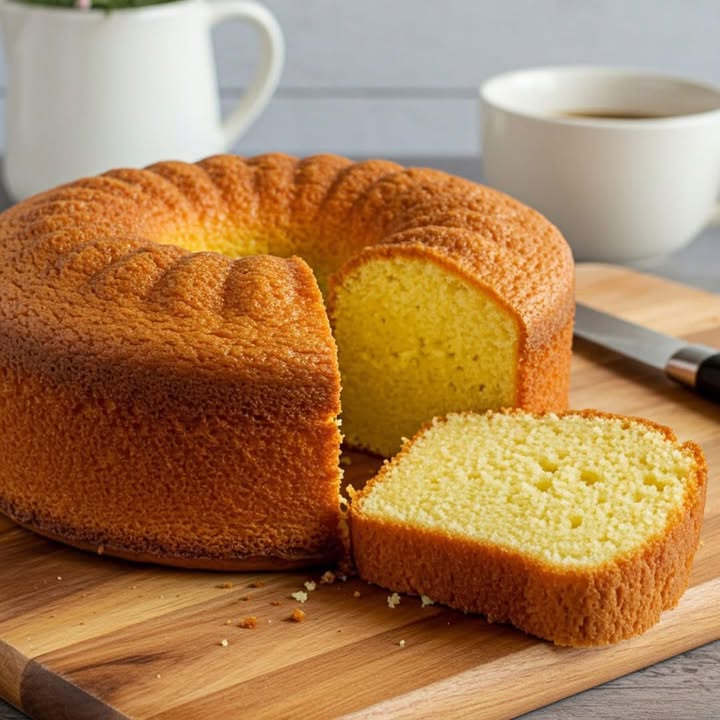
Mon Gâteau Spongieux au Blender : Le Secret pour ne plus jamais le Rater !
Y a-t-il quelque chose de mieux que l’odeur d’un gâteau qui cuit un dimanche après-midi ? Cette promesse sucrée et vanillée qui flotte dans la maison et rassemble tout le monde dans la cuisine. Pendant des années, j’avais peur des gâteaux spongieux. Ils s’affaissaient, collaient, ou avaient le goût d’une brique. Puis j’ai découvert la magie de mon blender. Ma recette de « gâteau spongieux au blender » est la préférée de ma famille. Elle est si simple que vous ne pouvez pas la rater !
Un Gâteau Né d’un Heureux Hasard
Cette recette semble tout droit sortie du cahier de recettes de nos grands-mères, mais sa vraie magie, c’est sa rapidité moderne. Le classique quatre-quarts nous a enseigné le ratio sacré des œufs, du beurre, de la farine et du sucre. Ma version en garde l’âme mais supprime toutes les complications. L’idée d’utiliser un blender m’est venue un matin très chargé. J’étais en retard pour un événement à l’école des enfants et j’avais besoin d’un gâteau, vite. J’ai tout mis dedans, j’ai mixé, en espérant le meilleur. Le résultat a été le gâteau le plus moelleux et le plus parfait que j’aie jamais fait ! Maintenant, c’est ma recette passe-partout.
Pourquoi Vous Allez Tomber Amoureux de Ce Gâteau Spongieux au Blender
Premièrement, il est incroyablement rapide. En cinq minutes, votre pâte est prête. Pas de beurre ramolli à mélanger avec le sucre, pas de farine tamisée dans dix bols. C’est un miracle en un seul pichet ! Deuxièmement, la texture est un rêve : légère, aérienne et moelleuse, à chaque fois. Le blender fouette les œufs à la perfection, ce qui incorpore énormément d’air et donne cette mie parfaite. Enfin, il est si polyvalent. Dégustez-le nature, arrosez-le d’un glaçage au citron, ou utilisez-le comme base pour un magnifique gâteau à étages.
Les Occasions Parfaites pour Ce Gâteau Facile
C’est le petit fourre-tout de votre cuisine. Il convient à toutes les occasions. Besoin d’un gâteau rapide pour le café du matin ? C’est fait. Des invités de dernière minute ? C’est votre arme secrète. Les enfants réclament un goûter ? Servez-en une part. Vous préparez un anniversaire et voulez une base solide pour la crème ? Ce gâteau tient parfaitement. Il est aussi idéal pour les pâtissiers débutants qui veulent prendre confiance, ou pour tous ceux qui aiment le fait maison sans la corvée de nettoyage.
Rassemblez Vos Ingrédients
Cette liste simple est tout ce dont vous avez besoin pour la perfection :
- 5 gros œufs
- 65 g de beurre à température ambiante
- 2 tasses de farine de blé tout-usage
- 2 tasses de sucre
- 1 tasse de lait (à température ambiante)
- 1 cuillère à café de levure chimique
- 1 cuillère à café d’extrait de vanille
Substitutions d’Ingrédients Faciles
Pas besoin de courir au magasin ! Voici quelques substitutions faciles :
- Pour un gâteau sans lactose : Utilisez du lait végétal et une huile neutre à la place du beurre.
- Plus de vanille ? Une cuillère à soupe de rhum, de brandy ou du zeste d’agrumes (orange ou citron) fonctionne à merveille.
- Vous voulez une version complète ? Remplacez la moitié de la farine blanche par de la farine de blé complète.
Comment Réaliser Votre Gâteau Spongieux au Blender Parfait
Étape 1 : Le Départ en Trombe
Prenez le pichet de votre blender et cassez-y les œufs. Ajoutez le beurre, le lait, le sucre et l’extrait de vanille, tous à température ambiante. La clé, ce sont les ingrédients à température ambiante ! Ils s’incorporent mieux et emprisonnent plus d’air. Fixez le couvercle et faites tourner le blender à pleine vitesse pendant une à deux bonnes minutes. Regardez la transformation. Le mélange passe d’un liquide trouble à un nuage pâle, crémeux et mousseux. Cette aération est le secret d’une texture de gâteau incroyablement spongieuse et légère.
Étape 2 : L’Incorporation en Douceur
Maintenant, passez la vitesse du blender au minimum. Prenez votre tamis et maintenez-le au-dessus de l’ouverture du pichet. Tamisez un peu de la farine mélangée à la levure, laissez-la s’incorporer, puis ajoutez-en un peu plus. Nous l’ajoutons progressivement pour ne pas alourdir la pâte et faire retomber tout ce bel air que nous venons de créer. Le mélange va épaissir en une pâte lisse, fluide et jaune pâle. Astuce de pro : Ne soyez pas tenté de remixer à haute vitesse ! Un mélange doux et lent suffit pour une intégration parfaite.
Étape 3 : Direction le Moule
Prenez votre moule à gâteau préféré et beurrez-le généreusement ou utilisez un spray antiadhésif. Farinez légèrement l’intérieur en tapotant pour enlever l’excédent. Versez votre belle pâte lisse dans le moule. Elle va glisser facilement. Tapotez doucement le moule sur le plan de travail quelques fois pour libérer les grosses bulles d’air qui pourraient créer des trous irréguliers dans votre gâteau cuit.
Étape 4 : La Cuisson vers la Perfection Dorée
Préchauffez votre four à 180°C (350°F). C’est très important que le four soit bien chaud avant d’y mettre le gâteau. Placez votre moule au centre du four et refermez la porte. Résistez à la tentation de l’ouvrir pendant au moins les 30 premières minutes ! Le gâteau a besoin d’une chaleur constante pour bien monter. Après 40 minutes, vous pouvez faire le classique « test du cure-dent ». Enfoncez un cure-dent ou une pointe de couteau propre dans la partie la plus profonde du gâteau. S’il ressort propre, votre gâteau est cuit. Sinon, donnez-lui encore 5 minutes.
Étape 5 : L’Épreuve de la Patience
C’est peut-être l’étape la plus difficile ! Sortez le gâteau doré et parfumé du four. Laissez-le refroidir complètement dans son moule sur une grille pendant 10-15 minutes. Cela permet à la structure de se fixer. Passez ensuite un couteau autour des bords pour le décoller, retournez-le sur une assiette, puis posez-le à nouveau sur la grille pour qu’il refroidisse totalement. Cette patience empêche un gâteau chaud et fragile de s’affaisser. Astuce du chef : Pour des parts très nettes, enveloppez le gâteau refroidi dans du film alimentaire et laissez-le reposer à température ambiante quelques heures ou toute une nuit. La texture devient encore plus moelleuse et parfaite pour la découpe.
Le Timing, c’est Tout
Détaillons notre engagement en temps :
- Préparation : 10 minutes (surtout pour sortir les ingrédients et mixer !)
- Cuisson : 40-45 minutes
- Refroidissement : Au minimum 1 heure (pour démouler et décorer)
- Temps Total : Environ 2 heures, mais la majorité est de la cuisson et du refroidissement sans intervention.
Mon Secret N°1 pour le Meilleur Gâteau au Blender
Voici mon astuce ultime : les ingrédients à température ambiante. Vraiment ! Sortez vos œufs, votre lait et votre beurre du frigo au moins une heure avant de commencer. Cela fait toute la différence. Les ingrédients froids ne se mélangent pas aussi bien. Ils peuvent faire cailler légèrement la pâte et, surtout, emprisonnent beaucoup moins d’air. Les ingrédients à température fouettent beaucoup plus et créent un volume plus stable, garantissant cette mie spongieuse et élastique.
Pourquoi Ce Gâteau Sent-il si Bon ?
L’incroyable odeur qui embaume votre maison est la combinaison magique de la réaction de Maillard et de la vanille. Pendant la cuisson, les sucres et les protéines des œufs et du lait réagissent avec la chaleur. Cela crée des centaines de nouveaux composés aromatiques, qui nous donnent cette odeur classique de pâtisserie et cette belle croûte dorée. C’est l’odeur du bonheur, de la science et d’une gourmandise presque prête.
De Quoi Avez-vous Besoin pour Vous Lancer ?
Pas besoin d’ustensiles sophistiqués ! Voici la liste :
- Un blender puissant
- Un moule à gâteau standard (22-24 cm de diamètre c’est bien)
- Un tamis
- Une spatule en caoutchouc
- Une grille de refroidissement
- Un cure-dent ou un testeur à gâteau
Comment Conserver Votre Gâteau Frais
Conservation à court terme : La meilleure façon de garder votre gâteau moelleux est à température ambiante. Une fois qu’il a complètement refroidi, emballez-le bien dans du film alimentaire ou placez-le dans un contenant hermétique. Il restera parfaitement moelleux et délicieux jusqu’à 3 jours.
Pour une conservation plus longue : Si vous voulez le garder plus longtemps, la congélation est votre amie. Enveloppez le gâteau entier ou des parts individuelles dans du film alimentaire, puis à nouveau dans du papier aluminium ou un sac de congélation. Il peut se conserver jusqu’à 3 mois. Décongelez-le une nuit au réfrigérateur ou quelques heures à température ambiante.
Et s’il devient un peu sec ? Ne vous inquiétez pas ! Un glaçage au sirop simple (mêmes quantités de sucre et d’eau, chauffées jusqu’à dissolution, avec un trait d’arôme) badigeonné légèrement sur la surface peut le rafraîchir à merveille. C’est aussi une astuce géniale si vous prévoyez de recouvrir le gâteau de pâte à sucre.
Mes Meilleurs Conseils pour un Gâteau Parfait à Chaque Fois
- Préchauffez toujours votre four. Cuire dans un four froid est une recette pour un gâteau dense et plat.
- Ne surmixez pas une fois la farine ajoutée. Quelques grumeaux valent mieux qu’un développement excessif de gluten, qui rend le gâteau caoutchouteux.
- Utilisez un moule de la bonne taille. S’il est trop grand, votre gâteau sera mince et sec. S’il est trop petit, il va déborder.
- Faites plus confiance au test du cure-dent qu’à la minuterie. Les températures des fours peuvent varier.
Comment le Rendre Beau : Idées de Présentation
Un beau gâteau fait sourire tout le monde !
- Saupoudrez d’une couche neigeuse de sucre glace.
- Nappez d’un simple glaçage au citron ou au chocolat.
- Décorez avec des fruits rouges frais et une quenelle de crème fouettée.
- Servez une part avec une boule de glace à la vanille pour un dessert instantané.
- Pour une fête, doublez la recette pour faire deux étages et garnissez-les de confiture ou de crème au beurre.
Plus d’Inspirations de Gâteaux Délice
Si vous avez aimé ce gâteau au blender, vous allez adorer explorer d’autres pâtisseries faciles. Pourquoi ne pas essayer un rafraîchissant gâteau simple aux fraises quand c’est la saison ? Pour une occasion spéciale, un somptueux gâteau marbré à la crème au beurre est toujours impressionnant. Les jours de chaleur, un cheesecake à l’orange frais, sans cuisson est une perfection fraîche et onctueuse. Et pour un goût classique, rien ne vaut un moelleux gâteau vanille au babeurre. Retrouvez tous ces trésors et plus encore dans notre dédiée collection de recettes de gâteaux et pâtisseries préférées !
Erreurs Courantes à Éviter pour un Gâteau Parfait
Erreur 1 : Utiliser des Ingrédients Froids Sortis du Fridge
C’est la raison numéro un des gâteaux trop denses. Le beurre froid n’émulsionne pas bien avec les œufs, et le lait froid peut faire séparer la pâte. Surtout, les œufs froids ne vont pas monter à leur plein volume dans le blender. Ce volume, c’est la levée de votre gâteau ! Pensez toujours à l’avance et laissez vos œufs, lait et beurre sur le comptoir au moins 30 à 60 minutes avant de commencer.
Erreur 2 : Trop Mixer Après l’Ajout de la Farine
Une fois les ingrédients liquides crémeux, on pourrait croire que plus on mixe, mieux c’est. C’est faux ! Quand la farine rencontre du liquide et est trop travaillée, elle développe du gluten. Le gluten est excellent pour le pain, mais il rend les gâteaux durs et caoutchouteux. Quand vous ajoutez la farine, mixez seulement à vitesse minimale et juste jusqu’à ce qu’elle disparaisse dans la pâte. Quelques petits grumeaux sont parfaitement acceptables, et même préférables.
Erreur 3 : Ouvrir la Porte du Four Trop Tôt
La curiosité est naturelle ! Mais ouvrir la porte avant que le gâteau n’ait pris peut être désastreux. Un courant d’air froid peut faire s’effondrer la structure délicate et en pleine expansion à l’intérieur. Vous vous retrouvez alors avec un gâteau affaissé. Programmez un minuteur pour au moins 30-35 minutes et résistez à l’envie de regarder. Utilisez la lumière du four pour observer visuellement sa progression si c’est possible.
Erreur 4 : Ne pas Laisser le Gâteau Refroidir Avant de le Démouler
Quand le gâteau sort du four, il est encore très mou et fragile à l’intérieur. Essayer de le démouler immédiatement va le casser. Laissez-le reposer dans le moule pendant 10-15 minutes. Cela permet à l’amidon de se fixer et donne au gâteau la force de garder sa forme. Passez ensuite un couteau autour du bord avant de le retourner sur une grille.
Erreur 5 : Sauter l’Étape du Tamisage des Ingrédients Secs
On pourrait penser que c’est une étape d’un autre temps que l’on peut sauter. Ne le faites pas ! Tamiser la farine avec la levure fait deux choses cruciales. Premièrement, cela aère la farine, la rendant plus légère et plus facile à incorporer. Deuxièmement, cela garantit que la levure est répartie uniformément. Une distribution inégale conduit à un gâteau qui lève de façon irrégulière, avec de gros tunnels ou trous inattendus à l’intérieur.
Vos Questions sur le Gâteau Spongieux au Blender, Réponses !
Puis-je utiliser un batteur électrique au lieu d’un blender ?
Absolument ! Le travail principal du blender est de fouetter les œufs et de tout combiner rapidement. Un batteur électrique dans un grand bol donnera le même résultat. Assurez-vous simplement de battre les œufs, le sucre, le beurre, le lait et la vanille pendant 3-4 minutes jusqu’à ce que le mélange soit pâle et mousseux, pour incorporer assez d’air. Ensuite, incorporez délicatement les ingrédients secs tamisés avec une spatule pour ne pas faire retomber la préparation. Le résultat sera tout aussi bon.
Pourquoi mon gâteau a-t-il monté puis creusé au milieu ?
Un gâteau qui s’affaisse est souvent le signe de deux choses : trop d’agent levant ou une cuisson insuffisante. Si vous avez ajouté trop de levure, le gâteau monte trop vite puis s’effondre avant que sa structure ne soit fixée. Mesurez toujours votre levure avec précision. Une cuisson insuffisante est un autre coupable courant. Le gâteau semble cuit à l’extérieur, mais l’intérieur est encore humide et ne peut pas supporter le poids. Utilisez toujours le test du cure-dent et assurez-vous qu’il ressort complètement propre du centre.
Comment puis-je rendre ce gâteau plus moelleux ?
La recette est déjà bien moelleuse ! Pour plus d’humidité, vous pouvez remplacer le lait par du babeurre ou un mélange 50/50 de lait et de yaourt nature. Ajouter une cuillère à soupe supplémentaire de beurre peut aussi aider. Enfin, la meilleure astuce est le glaçage au sirop mentionné plus haut. Une fois le gâteau refroidi, badigeonnez légèrement sa surface d’un sirop simple (sucre et eau chauffés ensemble). Cela scelle l’humidité et ajoute une belle brillance.
Puis-je ajouter des arômes comme le citron ou le chocolat ?
Oui, ce gâteau est une toile vierge fantastique ! Pour un gâteau au citron, ajoutez le zeste d’un citron dans le blender avec les ingrédients humides. Vous pouvez aussi remplacer une cuillère à soupe de lait par du jus de citron frais. Pour le chocolat, remplacez 1/4 de tasse de farine par de la poudre de cacao non sucrée (tamisée, bien sûr). Vous pouvez même incorporer des pépites de chocolat ou des noix après le mixage pour de la texture.
Mon gâteau est trop sucré. Puis-je réduire le sucre ?
Vous pouvez réduire un peu le sucre, mais avec prudence. Le sucre ne fait pas qu’adoucir un gâteau ; il aide au brunissement, à la rétention d’humidité et à la tendreté. Je ne recommanderais pas de le réduire de plus d’1/4 de tasse. Si vous le faites, votre gâteau pourrait être un peu plus dense et moins doré. Commencez par une réduction d’1/4 de tasse et voyez si le résultat vous plaît.
Que puis-je utiliser à la place de la farine de blé pour une version sans gluten ?
Vous pouvez utiliser un mélange de farine tout-usage sans gluten 1:1. Assurez-vous que le mélange contient de la gomme xanthane ou de la gomme de guar, qui aide à reproduire la structure normalement apportée par le gluten. Suivez la recette exactement de la même manière. La texture pourrait être légèrement différente, mais ce sera tout aussi délicieux ! Vous pouvez aussi essayer la farine d’amande, mais vous devrez ajuster les quantités et probablement ajouter un œuf supplémentaire pour la structure.
Puis-je faire des cupcakes avec cette pâte ?
Absolument ! Cette pâte fonctionne parfaitement pour les cupcakes. Remplissez vos moules à muffins chemisés aux 2/3 environ. Le temps de cuisson sera bien plus court – commencez à vérifier à 18-20 minutes dans un four à 180°C. Ils sont cuits quand un cure-dent inséré au centre ressort propre. Laissez-les refroidir dans le moule 5 minutes avant de les transférer sur une grille.
Comment savoir si ma levure est encore active ?
La levure chimique perd de sa puissance avec le temps. Pour la tester, mélangez 1/2 cuillère à café de votre levure avec 1/4 de tasse d’eau chaude. Elle doit mousser et bouillonner vigoureusement immédiatement. Si la réaction est faible ou lente, il est temps d’en acheter une nouvelle. Un agent levant frais est crucial pour un gâteau qui lève correctement, donc ce simple test peut sauver votre pâtisserie.
Pourquoi utiliser un blender ? Quel est l’avantage ?
Le blender fait gagner un temps et un effort considérables ! Il combine tous les ingrédients humides en quelques secondes et, surtout, incorpore une quantité phénoménale d’air dans les œufs. Cette aération agit comme un agent levant naturel, vous donnant une mie de gâteau plus légère et duveteuse sans avoir besoin de crémer séparément le beurre et le sucre. Cela simplifie le processus à « tout verser et mixer », le rendant moins intimidant pour les nouveaux pâtissiers.
Vaut-il mieux utiliser un moule en métal ou en silicone ?
Les deux fonctionnent bien, mais ils se comportent un peu différemment. Un moule en métal foncé ou antiadhésif absorbe la chaleur plus efficacement et peut donner une croûte plus foncée. Vous pourriez avoir besoin de réduire la température du four de 10°C. Les moules en aluminium clair sont très fiables pour une cuisson uniforme. Les moules en silicone sont géniaux pour un démoulage facile mais ne conduisent pas aussi bien la chaleur. Le gâteau peut mettre quelques minutes de plus à cuire, et les côtés pourraient moins dorés. Ma préférence personnelle va au classique moule en métal clair, bien beurré et fariné.
Prêts ? Mixez !
Et voilà, ma recette infaillible pour un parfait gâteau spongieux maison au blender. C’est la recette vers laquelle je me tourne quand j’ai besoin de quelque chose de fiable, de délicieux et rempli d’amour en un rien de temps. Elle prouve que faire quelque chose de maison n’a pas besoin d’être compliqué. J’espère qu’elle apportera autant de joie dans votre cuisine qu’elle en a apporté dans la mienne. Alors allez-y, attrapez votre blender, et faisons un peu de magie ! N’oubliez pas de partager vos belles créations avec nous — et pour plus d’inspiration gourmande, souvenez-vous que la joie des repas faits maison n’est jamais loin.
Equipment
- Blender
- Moule à gâteau standard (22-24 cm de diamètre)
- Tamis
- Spatule en caoutchouc
- Grille de refroidissement
Ingrédients
- 5 pièces œufs de taille large
- 65 g beurre à température ambiante
- 2 tasses farine de blé tout usage
- 2 tasses sucre
- 1 tasse lait à température ambiante
- 1 cuillère à café levure chimique
- 1 cuillère à café extrait de vanille
Instructions
- Dans le pichet du mélangeur, cassez les œufs. Ajoutez le beurre, le lait, le sucre et l'extrait de vanille à température ambiante.
- Mixez à haute vitesse pendant 1 à 2 minutes jusqu'à obtenir un mélange crémeux.
- Réduisez la vitesse du mélangeur et tamisez progressivement la farine mélangée à la levure chimique dans le pichet, en mélangeant délicatement.
- Graissez un moule à gâteau avec du beurre ou un spray antiadhésif et farinez-le légèrement.
- Versez la pâte dans le moule et tapotez-le sur le comptoir pour libérer les grosses bulles d'air.
- Préchauffez le four à 180°C (350°F) et enfournez le moule pendant 40 à 45 minutes.
- Réalisez le test du cure-dent pour vérifier la cuisson. Si le cure-dent ressort propre, le gâteau est cuit.
- Laissez refroidir le gâteau dans le moule pendant 10-15 minutes, puis démoulez-le sur une grille pour qu'il refroidisse complètement.
Notes
Nutrition

Je suis Céline, une véritable passionnée d’ustensiles et de matériel de cuisine ! J’adore tester, comparer et découvrir les meilleurs équipements pour rendre la cuisine plus efficace et agréable. Que ce soit un bon couteau, un robot performant ou une poêle incontournable, je suis toujours à la recherche des outils qui feront la différence. Mon but est de vous guider dans vos choix pour que vous ayez le bon matériel adapté à vos besoins.