
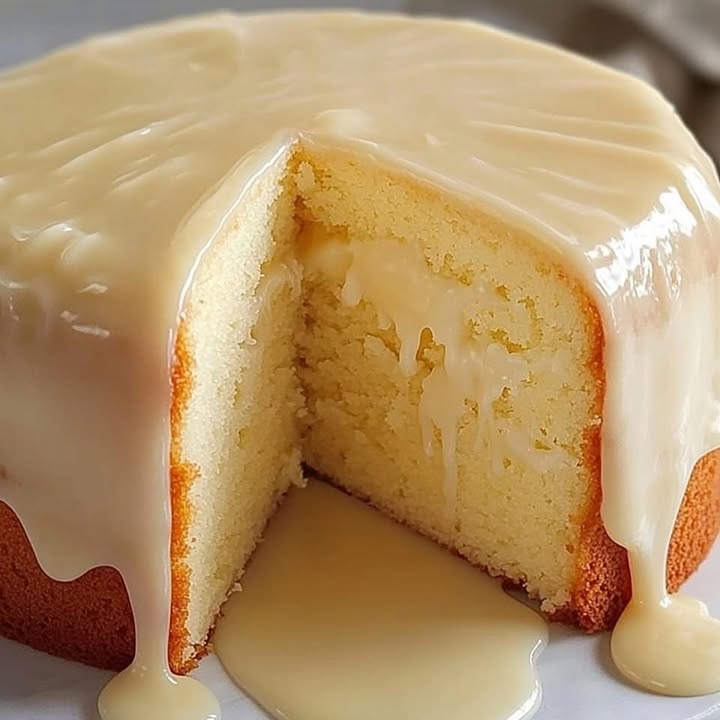
Un rayon de soleil : Mon Gâteau Vanille Buttermilk Ultime
Vous connaissez ce sentiment quand on a besoin d’un gâteau qui réconforte comme un câlin ? Le gâteau vanille buttermilk, c’est exactement ça. C’est la pièce maîtresse fiable et délicieusement bonne qui ne fait jamais défaut. Je me souviens avoir préparé mon premier pour un repas partagé entre amis, priant pour qu’il ne rate pas. L’odeur de vanille pure et de beurre emplissant ma cuisine fut le premier signe de succès. Le deuxième ? Quand une voisine m’a demandé la recette avant même d’avoir fini sa part ! Ce n’est pas qu’un gâteau ; c’est un créateur de souvenirs, et aujourd’hui, je partage avec vous ma version chérie.
D’humbles débuts à star de la cuisine
Les gâteaux au babeurre ont une riche histoire, nés de la débrouillardise. Il y a des générations, les pâtissiers ne gaspillaient pas le liquide acidulé restant du barattage du beurre. Ils en ont découvert la magie avec le bicarbonate, créant des gourmandises incroyablement moelleuses et tendres. Notre Gâteau Vanille Buttermilk est une belle évolution de cette tradition. Il va au-delà du simple « gâteau jaune » pour devenir quelque chose d’extraordinaire. La combinaison du beurre généreux, de la vanille parfumée et de cette touche acidulée secrète du babeurre crée une saveur et une texture tout simplement inégalées.
Pourquoi vous allez adorer ce Gâteau Vanille Buttermilk
Cette recette est une réussite pour tant de raisons ! D’abord, sa saveur est pure, réconfortante et profondément satisfaisante. Elle est sucrée sans être écœurante, avec une pointe acidulée qui donne envie de se resservir. Ensuite, la texture est un rêve—incroyablement moelleuse, douce comme un nuage, avec une mie fine et délicate. Enfin, il est merveilleusement polyvalent. Savourez-le nature, saupoudré de sucre, ou, comme moi, je l’adore, nappé d’un glaçage onctueux au fromage frais. C’est une base infaillible pour d’innombrables célébrations.
Quand préparer ce gâteau spectaculaire
Ce Gâteau Vanille Buttermilk est votre allié pour toutes les occasions ! Il est parfait pour un déjeuner dominical en famille, apportant une touche de douceur maison à la table. C’est une star des anniversaires, facile à habiller avec des vermicelles ou des fruits rouges frais. Besoin d’une douceur pour un ami qui traverse une semaine difficile ? Une part de ce gâteau dit « je suis là pour toi » mieux que des mots. Honnêtement, je l’ai fait « juste parce que c’est mardi » plus de fois que je ne peux compter !
Rassembler vos ingrédients
Des ingrédients simples et de qualité sont la clé. Voici ce dont vous aurez besoin pour cette belle recette de gâteau au babeurre :
Pour le gâteau :
- 345 g de farine tout usage
- 1/2 cuillère à café de levure chimique
- 1/4 de cuillère à café de bicarbonate de soude
- 1/2 cuillère à café de sel
- 225 g de beurre doux, ramolli
- 450 g de sucre en poudre
- 4 gros œufs
- 1 cuillère à café d’extrait de vanille
- 240 ml de babeurre
Pour le glaçage au fromage frais :
- 115 g de fromage frais type Philadelphia, ramolli
- 115 g de sucre glace, tamisé
- 2-3 cuillères à soupe de lait (à ajuster selon la consistance)
- 1/2 cuillère à café d’extrait de vanille
Remplacements et substitutions
Pas de babeurre ? Pas de problème ! Faites-le vous-même en ajoutant 1 cuillère à soupe de vinaigre blanc ou de jus de citron dans une tasse à mesurer. Complétez avec du lait entier jusqu’à la marque des 240 ml. Mélangez et laissez reposer 5-10 minutes jusqu’à ce qu’il caille légèrement. Si vous n’avez pas de fromage frais pour le glaçage, un simple glaçage vanille avec du sucre glace et du lait fonctionne très bien. Pour une autre touche, vous pouvez remplacer la vanille par de l’extrait d’amande—utilisez-en seulement la moitié, car il est plus puissant.
Créer votre Gâteau Vanille Buttermilk parfait
Étape 1 : Préparer et préchauffer
D’abord, préparez votre four. Préchauffez-le à 160°C (th. 5-6). C’est un peu moins chaud que beaucoup de recettes de gâteau, mais cela assure une cuisson lente et uniforme qui évite les bords secs et un cœur cru. Pendant qu’il chauffe, prenez votre moule. Un moule rond profond de 20 cm ou un moule à Bundt classique est idéal. Beurrez et farinez chaque recoin, ou utilisez un spray de cuisson de bonne qualité. Croyez-moi, cette étape est non-négociable pour un démoulage parfait !
Étape 2 : Mélanger les ingrédients secs
Dans un saladier moyen, fouettez ensemble la farine, la levure, le bicarbonate et le sel. J’adore les tamiser ensemble. Ce n’est pas une corvée inutile—cela aère la farine, casse les grumeaux et assure une distribution parfaite des agents levants. Vous verrez la différence dans la mie fine et tendre de votre gâteau. Réservez ce mélange léger.
Étape 3 : Crémer le beurre et le sucre
C’est le cœur d’une bonne texture de gâteau. Dans un grand saladier, battez le beurre ramolli et le sucre. Utilisez un batteur électrique à vitesse moyenne. Vous ne faites pas que mélanger ; vous crémerez. Battez pendant 3-4 minutes complètes jusqu’à ce que le mélange soit pâle, mousseux, presque comme un nuage doux. Les cristaux de sucre creusent de minuscules poches d’air dans le beurre. Ces poches vont s’expanser au four, donnant à votre gâteau son volume et sa légèreté.
Pro tip : Le beurre « ramolli » doit s’enfoncer facilement sous une pression mais garder sa forme. Trop mou ou fondu, et vous perdez cet air crucial.
Étape 4 : Ajouter les œufs et la vanille
Maintenant, ajoutez vos œufs, un par un. Battez bien après chaque ajout avant d’ajouter le suivant. Cela permet à chaque œuf de s’émulsionner complètement dans le mélange beurre-sucre. Si vous les ajoutez tous d’un coup, la pâte peut cailler et sembler séparée. Ne paniquez pas si elle a l’air un peu caillée—ajouter la farine arrangera ça. Enfin, incorporez cette glorieuse cuillère à café de vanille. L’arôme est déjà divin !
Étape 5 : Combiner le sec et le liquide
Voici la partie délicate. Avec votre batteur sur vitesse basse, ajoutez environ un tiers du mélange de farine au bol de beurre. Mélangez jusqu’à ce que ce soit presque combiné. Ensuite, versez la moitié du babeurre. Mélangez, puis répétez avec un autre tiers de farine, le reste du babeurre, et enfin le dernier tiers de farine. Mélangez juste jusqu’à ce que vous ne voyiez plus de traînées de farine. Trop mélanger à ce stade est l’ennemi de la tendreté—cela développe le gluten et peut rendre le gâteau caoutchouteux.
Étape 6 : Cuire jusqu’à la perfection dorée
Versez votre belle pâte lisse dans votre moule préparé. Lissez délicatement le dessus avec une spatule. Placez-le au centre de votre four préchauffé. Maintenant, patience ! Ce gâteau cuit de 60 à 80 minutes. Le temps varie selon votre moule et votre four. Commencez à vérifier à 60 minutes avec un cure-dent ou une pointe de couteau. C’est cuit quand le cure-dent ressort propre, le dessus est d’un joli brun doré, et le gâteau revient légèrement quand on le touche.
Étape 7 : Refroidir et démouler
Quand le gâteau est cuit, laissez-le refroidir dans le moule sur une grille pendant 10-15 minutes. Cette période de repos permet à la structure de se fixer. Si vous essayez de le retourner chaud, il pourrait s’émietter. Ensuite, placez la grille sur le moule, retournez le tout, et soulevez délicatement le moule. Laissez le gâteau refroidir complètement avant de glacer. Un gâteau tiède fera fondre le glaçage !
Astuce du Chef : Pour une mie extra-moelleuse, vous pouvez envelopper le gâteau complètement refroidi dans du film alimentaire et le laisser reposer une nuit. Les saveurs se marient et la texture devient encore plus incroyable.
Étape 8 : Préparer le glaçage onctueux
Pendant que le gâteau refroidit, faites votre glaçage. Dans un bol, battez le fromage frais ramolli jusqu’à ce qu’il soit complètement lisse et sans grumeaux. Incorporez progressivement le sucre glace tamisé. Le tamisage évite les grumeaux, vous donnant une texture soyeuse. Ajoutez la vanille, puis ajoutez le lait, une cuillère à soupe à la fois, jusqu’à obtenir la consistance parfaite, coulante. Il doit former un ruban qui tombe du fouet.
Étape 9 : Glacer, découper et savourer !
Placez votre gâteau complètement refroidi sur une assiette de service. Versez le glaçage artistiquement sur le dessus, en le laissant couler sur les côtés. J’aime utiliser une cuillère ou une petite bouteille souple pour plus de contrôle. Laissez le glaçage prendre quelques minutes. Puis, avec un couteau bien aiguisé, découpez, servez et préparez-vous à recevoir des compliments !
Votre planning de préparation
Voici un aperçu rapide de ce à quoi vous attendre :
- Temps de préparation : 20 minutes (encore plus rapide après l’avoir fait quelques fois !)
- Temps de cuisson : 60-80 minutes
- Temps de refroidissement : Au moins 1 heure
- Temps total : Environ 2 heures 40 minutes du début à la première bouchée
Mon secret pour le meilleur gâteau au babeurre
La règle de la température ambiante ! C’est ma règle d’or. Assurez-vous que votre beurre, vos œufs et votre babeurre sont tous à température ambiante avant de commencer. Les ingrédients froids ne se mélangent pas aussi bien, ce qui peut donner une pâte caillée et un gâteau plus dense. Les ingrédients à température ambiante s’émulsionnent à merveille, créant un plus grand volume et une mie plus légère et uniforme. Cela fait toute la différence !
Un peu de science culinaire
Vous êtes-vous déjà demandé pourquoi on utilise du babeurre en pâtisserie ? Son acidité est la clé ! Elle réagit avec le bicarbonate de soude dans la recette. Cette réaction produit de minuscules bulles de dioxyde de carbone. Ces bulles sont piégées dans la pâte pendant la cuisson, agissant comme un agent levant naturel. Cela donne au gâteau son beau volume et cette texture tendre et moelleuse caractéristique qu’on ne peut pas obtenir avec du lait normal seul.
Les outils dont vous aurez besoin
Pas besoin d’équipement sophistiqué ! Un bon jeu de saladiers, un batteur électrique ou un robot pâtissier, une spatule, et votre moule à gâteau choisi (20 cm profond ou Bundt) sont les essentiels. Un fouet pour les ingrédients secs, une grille pour le refroidissement et un cure-dent pour vérifier la cuisson complètent la liste. Simple et efficace !
Conserver votre gâteau frais et délicieux
Si vous avez des restes (un événement rare chez moi !), les conserver correctement est essentiel. D’abord, assurez-vous que le gâteau est complètement froid. Toute chaleur piégée à l’intérieur créera de la condensation et le rendra détrempé.
La meilleure façon de conserver un gâteau entier, non glacé, est de l’envelopper hermétiquement dans du film alimentaire. Vous pouvez aussi le conserver sous un dôme à gâteau. Le film alimentaire crée un joint qui emprisonne l’humidité, le gardant moelleux pendant des jours.
Pour un gâteau glacé, il est préférable de le conserver dans un contenant hermétique au réfrigérateur. Le glaçage au fromage frais bénéficie d’être réfrigéré. Laissez les parts revenir à température ambiante environ 15 minutes avant de servir pour la meilleure saveur et texture.
Astuces pour un gâteau réussi à chaque fois
- Mesurez la farine correctement : Aérez-la dans son paquet, versez-la à la cuillère dans votre verre mesureur, et nivelez avec le dos d’un couteau. Ne plongez pas le verre directement—cela tasse trop de farine et mène à un gâteau sec.
- N’ouvrez pas la porte du four trop tôt ! Vérifiez la cuisson seulement après le temps de cuisson minimum. L’ouvrir tôt peut faire tomber le gâteau.
- Utilisez de l’extrait de vanille naturel. La saveur est bien supérieure aux imitations artificielles dans un gâteau simple comme celui-ci.
- Amenez les ingrédients à température ambiante pour une pâte plus lisse.
- Enveloppez les restes de gâteau hermétiquement dans du film alimentaire pour le garder moelleux pendant des jours.
Faire de votre gâteau une pièce maîtresse
La présentation, c’est la touche finale ! Pour un look simple, saupoudrez le gâteau glacé d’un peu de sucre glace supplémentaire. Pour une explosion de fruits rouges, ajoutez un tas de framboises ou de fraises fraîches sur le dessus. Au printemps, des fleurs comestibles comme des pensées ou des violettes sont superbes. Pour une occasion spéciale, servez chaque part avec une quenelle de crème fouettée et un zeste d’orange. Laissez votre créativité s’exprimer !
Plus d’inspirations sucrées de ma cuisine
Si vous avez aimé ce gâteau vanille buttermilk classique, vous pourriez apprécier d’explorer d’autres idées de desserts délicieux. Pour un dessert crémeux simple et toujours apprécié, essayez cette recette facile de flan citron—il suffit de mixer et de réfrigérer ! Quand c’est la saison des fraises, un rafraîchissant gâteau aux fraises est une pure joie. Pour un dessert de célébration vraiment spectaculaire, ce gâteau marbré généreux au glaçage vanille est inoubliable. Et pour les jours de grande chaleur, un cheesecake orange sans cuisson façon creamsicle est la délice citronnée fraîche ultime.
Erreurs courantes à éviter pour la perfection du gâteau vanille
Erreur 1 : Des ingrédients froids
Utiliser des œufs, du beurre et du babeurre sortis directement du frigo est un piège fréquent. Les ingrédients froids ne se mélangent tout simplement pas bien. Le beurre ne se crème pas correctement avec le sucre, menant à un gâteau plus dense, moins aéré. La pâte peut même sembler caillée. La solution est simple : anticipez ! Sortez vos ingrédients environ une heure avant de prévoir de cuisiner. Votre beurre doit être mou mais pas huileux, et votre babeurre ne doit plus sembler froid au toucher.
Erreur 2 : Trop mélanger la pâte
Une fois que vous ajoutez la farine, votre technique de mélange doit changer. Trop mélanger après l’incorporation de la farine développe le gluten. C’est excellent pour le pain, mais terrible pour le gâteau. Cela donne une texture caoutchouteuse et dense au lieu d’une mie légère et tendre. La clé est de mélanger à vitesse basse et de s’arrêter dès que vous ne voyez plus de traînées de farine sèche. Quelques petits grumeaux vont très bien—ils disparaîtront à la cuisson.
Erreur 3 : Une mauvaise mesure de la farine
Plonger le verre mesureur directement dans le paquet de farine est un moyen garanti d’en mettre trop. Une tasse tassée de farine peut contenir bien plus qu’une tasse correctement mesurée. Cet excès de farine absorbe l’humidité, résultant en un gâteau sec et lourd. Utilisez toujours la méthode « verser et niveler » : aérez la farine dans son contenant, versez-la délicatement à la cuillère dans votre verre mesureur, et nivelez avec le dos d’un couteau.
Erreur 4 : Ouvrir la porte du four trop tôt
On comprend—c’est excitant de voir son gâteau monter ! Mais ouvrir la porte du four pendant les 45-50 premières minutes de cuisson est risqué. L’arrivée soudaine d’air plus froid peut faire s’effondrer la structure délicate du gâteau, menant à un centre qui s’affaisse. Faites confiance au processus et au minuteur. Utilisez la lumière du four pour jeter un coup d’œil. N’ouvrez la porte que pour vérifier la cuisson après que le temps de cuisson minimum soit passé.
Erreur 5 : Glacer un gâteau encore tiède
La patience est une vertu en pâtisserie, surtout ici. Verser ce magnifique glaçage au fromage frais sur un gâteau tiède est une recette pour une flaque fondue et désordonnée. La chaleur va fluidifier le glaçage et le faire pénétrer dans le gâteau ou simplement glisser. Laissez toujours, toujours, votre gâteau refroidir complètement sur une grille avant même de penser au glaçage. L’attente en vaut la peine pour cette belle finition qui prend.
Réponses d’experte à vos questions sur le gâteau
Puis-je utiliser un moule différent si je n’ai pas de moule rond profond de 20 cm ou de Bundt ?
Absolument ! Vous pouvez utiliser deux moules ronds standards de 23 cm. Veillez simplement à bien les beurrer et les fariner. Le temps de cuisson sera nettement plus court—commencez à vérifier à 25-30 minutes. Vous pouvez aussi utiliser un moule rectangulaire de 23×33 cm pour un gâteau bas. C’est parfait pour servir une foule et rend le glaçage très facile. Ajustez le temps de cuisson et surveillez de près, car un gâteau plus fin cuira plus vite.
Mon gâteau dore trop vite sur le dessus, mais l’intérieur n’est pas cuit. Que faire ?
Cela arrive ! Tous les fours ont des points chauds. Si vous remarquez que le dessus dore beaucoup plus vite que la cuisson du cœur, vous avez une solution simple. Posez légèrement une feuille de papier d’aluminium en forme de tente sur le dessus du moule à gâteau. Cela le protégera de la chaleur directe et empêchera un brunissement supplémentaire, permettant au centre de cuire sans brûler l’extérieur. Faites juste attention à ce que la feuille ne touche pas la surface du gâteau.
Puis-je préparer ce gâteau vanille buttermilk à l’avance ?
Oui, et c’est une excellente stratégie pour recevoir sans stress. Vous pouvez cuire les couches de gâteau jusqu’à deux jours à l’avance. Laissez-les refroidir complètement, puis enveloppez chaque couche hermétiquement dans du film alimentaire et conservez à température ambiante. Vous pouvez aussi congeler les couches jusqu’à 3 mois. Décongelez une nuit au réfrigérateur avant de glacer et de servir. La saveur s’améliore souvent après un jour de repos !
Pourquoi mon gâteau est dense et lourd au lieu d’être léger et aéré ?
Un gâteau dense pointe généralement vers quelques problèmes courants. D’abord, vérifiez vos agents levants (levure et bicarbonate). Sont-ils frais ? Les vieux perdent leur puissance. Ensuite, vous avez peut-être trop mélangé la pâte après avoir ajouté la farine, développant trop de gluten. Troisièmement, utiliser des ingrédients froids peut empêcher une bonne aération pendant le crémerge. Enfin, assurez-vous d’avoir bien mesuré votre farine—trop de farine est une cause majeure de gâteaux denses.
Par quoi puis-je remplacer le babeurre ?
Ne vous inquiétez pas si vous n’avez pas de babeurre. Un substitut maison fonctionne presque aussi bien. Ajoutez simplement 1 cuillère à soupe de vinaigre blanc ou de jus de citron frais dans un verre mesureur. Puis, complétez avec du lait entier jusqu’à la marque des 240 ml. Mélangez et laissez reposer 5-10 minutes. Il va cailler et s’épaissir légèrement, imitant l’acidité et la texture du vrai babeurre.
Puis-je congeler ce gâteau ?
Vous pouvez congeler ce gâteau très facilement, mais il est préférable de le congeler sans le glaçage. Enveloppez le gâteau complètement refroidi et non glacé hermétiquement dans du film alimentaire, puis dans une couche de papier d’aluminium. Placez-le dans un sac congélation si possible. Il se conservera jusqu’à 3 mois. Pour servir, décongelez-le une nuit au réfrigérateur ou quelques heures à température ambiante. Une fois décongelé, préparez votre glaçage au fromage frais frais et versez-le dessus.
Comment savoir quand le gâteau est parfaitement cuit ?
Utiliser plusieurs signes est mieux que de se fier à un seul. D’abord, les bords du gâteau se détacheront légèrement des parois du moule. Ensuite, le dessus sera d’un brun doré uniforme et reviendra légèrement quand vous le toucherez au centre. Troisièmement, et de façon plus fiable, insérez un cure-dent, une pointe de couteau ou une lame fine dans la partie la plus épaisse du gâteau. Il doit ressortir propre ou avec quelques miettes humides collées—pas de pâte crue.
Mon glaçage au fromage frais est trop liquide/trop épais. Comment le rectifier ?
La consistance du glaçage est facile à ajuster. S’il est trop liquide et coule, battez simplement un peu plus de sucre glace tamisé, une cuillère à soupe à la fois, jusqu’à ce qu’il épaississe. S’il est trop épais et ne coule pas, ajoutez plus de lait, juste une cuillère à café à la fois, jusqu’à ce qu’il atteigne une consistance coulante, formant un ruban. Rappelez-vous, il va légèrement s’épaissir en prenant sur le gâteau froid.
Y a-t-il un moyen de faire cette recette avec moins de sucre ?
Vous pouvez réduire légèrement le sucre, mais soyez prudent. Le sucre n’ajoute pas seulement de la douceur ; il contribue à l’humidité, à la tendreté, au brunissement et à la structure. Le réduire de plus de 10-15% peut affecter la texture et le volume du gâteau. Une meilleure approche pour une alimentation équilibrée est de savourer une part raisonnable dans le cadre d’un régime varié. Pour en savoir plus, des ressources sur l’équilibre alimentaire peuvent offrir de bons conseils généraux.
Puis-je ajouter des saveurs comme le citron ou l’amande à cette recette de base ?
Certainement ! Ce gâteau est une toile merveilleuse. Pour un gâteau citron buttermilk, ajoutez le zeste de deux citrons dans le mélange beurre-sucre et utilisez du jus de citron dans le glaçage à la place du lait. Pour l’amande, remplacez la moitié de l’extrait de vanille par de l’extrait d’amande (environ 1/2 cuillère à café). Vous pourriez aussi incorporer des myrtilles ou des framboises fraîches légèrement roulées dans de la farine à la pâte pour une touche fruitée.
Si vous cherchez plus d’inspiration pour votre prochain projet de pâtisserie, j’ai toute une collection de recettes délicieuses de gâteaux et pâtisseries qui vous attendent. Des douceurs simples du quotidien aux pièces montées de fête, il y a toujours quelque chose de nouveau à essayer.
Une dernière part de bonheur
Et voilà—mon secret éprouvé pour le Gâteau Vanille Buttermilk le plus délicieux. C’est plus qu’une simple liste d’étapes ; c’est une invitation à créer quelque chose de merveilleux. Son parfum en train de cuire est du pur réconfort, et la première bouchée est du pur bonheur. Que ce soit pour une grande fête ou un mardi tranquille avec une tasse de thé, ce gâteau apporte de la joie. Alors, attachez votre tablier, rassemblez vos ingrédients, et préparez-vous à faire quelque chose de vraiment spécial. Bonne pâtisserie !
Equipment
- Batteur électrique
- Moule rond de 20 cm ou moule Bundt
- Spatule
- Bol moyen
- Grille de refroidissement
Ingrédients
- 350 g farine tout usage
- 1/2 c.c poudre à lever
- 1/4 c.c bicarbonate de soude
- 1/2 c.c sel
- 225 g beurre non salé, ramolli
- 450 g sucre granulé
- 4 grands œufs
- 1 c.c extrait de vanille
- 240 ml babeurre
Instructions
- Préchauffez le four à 160°C (325°F) et préparez un moule.
- Dans un bol moyen, mélangez la farine, la poudre à lever, le bicarbonate de soude et le sel.
- Dans un grand bol, battez le beurre ramolli et le sucre pendant 3-4 minutes.
- Ajoutez les œufs un par un en battant bien après chaque ajout, puis incorporez l'extrait de vanille.
- Ajoutez un tiers du mélange de farine au mélange de beurre, mélangez presque, puis ajoutez la moitié du babeurre.
- Répétez avec un autre tiers de farine, le reste du babeurre, puis le dernier tiers de farine. Mélangez jusqu'à ce qu'il n'y ait plus de traces de farine.
- Versez la pâte dans le moule préparé et lissez le dessus.
- Faites cuire pendant 60-80 minutes, vérifiez la cuisson avec un cure-dent.
- Laissez refroidir pendant 10-15 minutes dans le moule, puis démoulez.
- Pendant que le gâteau refroidit, préparez le glaçage en battant le fromage à la crème, puis ajoutez le sucre glace, l'extrait de vanille et enfin le lait pour obtenir la consistance désirée.
- Glacez le gâteau refroidi et servez.
Notes
Nutrition

Je suis Céline, une véritable passionnée d’ustensiles et de matériel de cuisine ! J’adore tester, comparer et découvrir les meilleurs équipements pour rendre la cuisine plus efficace et agréable. Que ce soit un bon couteau, un robot performant ou une poêle incontournable, je suis toujours à la recherche des outils qui feront la différence. Mon but est de vous guider dans vos choix pour que vous ayez le bon matériel adapté à vos besoins.