
Vague de Danube : Recette authentique et facile

Vague de Danube

Danube Wave: The Crowd-Pleasing German Cake You Need to Try

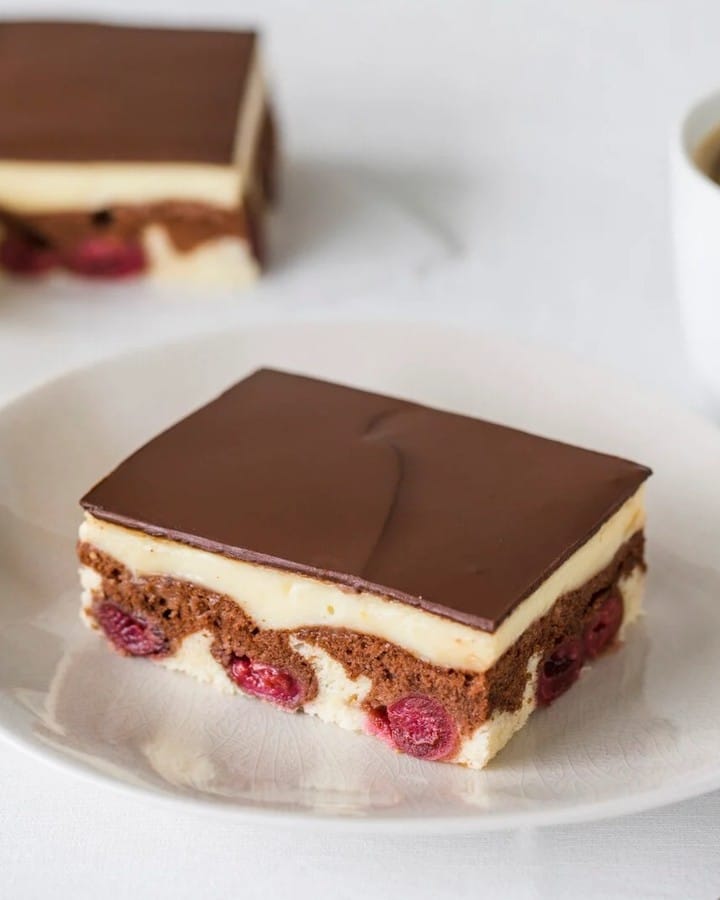
I have a confession: I’m a sucker for a dessert that looks like it came from a fancy bakery but secretly comes together in my own kitchen. That’s the magic of Danube Wave, or Donauwelle. The first time I made this German classic for a family gathering, its stunning marbled top and creamy layers earned me more « oohs » and « aahs » than anything else on the table. It’s a showstopper, but trust me, it’s a friendly kind of baking project—full of simple satisfaction and delicious rewards.

A Slice of History: Where Does the Danube Wave Cake Come From?

The exact origin of this beauty is a bit of a delicious mystery, much like the swirls in its dough. While its name suggests a link to the famous Danube River, food historians believe its popularity truly soared in post-war Germany. It became a staple in home kitchens and bakeries across the country. The classic version features a marbled vanilla and chocolate base, tart morello cherries, a thick layer of vanilla pudding cream, and a sleek chocolate glaze. It’s a perfect combination of textures and flavors that feels both nostalgic and utterly timeless. Every bite tells a story of home-baking tradition.

Why You’ll Fall in Love With This Danube Wave Recipe

What’s not to love? This cake is a total multi-sensory experience. You get the visual drama of the marbled sponge, the juicy burst of cherries, the cool, creamy custard, and the sharp snap of dark chocolate. It’s complex in flavor but built on straightforward techniques. If you can make a simple sponge cake and stir pudding, you’re 90% there. It’s the ultimate dessert to make ahead, as it only gets better and more melded after a night in the fridge. Plus, it feeds a crowd with ease!

Perfect Occasions for Your Homemade Donauwelle

This cake is your secret weapon for any event that calls for something special. It’s a guaranteed hit at birthday parties, potlucks, and holiday gatherings like Christmas or Easter. I love bringing it to casual coffee afternoons with friends—it immediately elevates the moment. Because it’s so sturdy and travels well, it’s also fantastic for picnics or as a thoughtful gift for a neighbor. Any time you want to impress without excessive stress, the Vague de Danube is your answer.

Gathering Your Ingredients for the Perfect Wave

Using quality ingredients makes a noticeable difference here, especially in the glaze and pudding. Here’s what you’ll need:

For the Dough

  • 5 eggs (size M)
  • 200g sugar
  • 125 ml neutral sunflower oil
  • 250 g wheat flour (Type 405 or all-purpose)
  • 2 teaspoons of baking powder
  • 125ml water
  • 2 tbsp baking cocoa
  • 2 tablespoons of milk
  • 1 jar of morello cherries (drained weight: 350 g)
  • Some butter for the mold

For the Filling

  • 1 liter of milk
  • 2 packs of vanilla pudding powder (for cooking)
  • 75g sugar
  • 200g soft butter

For the Glaze

  • 300 g dark chocolate couverture
  • 1 tsp coconut oil (or neutral oil)

Clever Substitutions for Danube Wave

No morello cherries? No problem! You can use well-drained sour cherries or even pitted dark sweet cherries in a pinch. For the chocolate glaze, a good quality dark chocolate bar works if you can’t find couverture. If you’re out of coconut oil for the glaze, any neutral oil like sunflower will do. For a slightly different twist, try using a chocolate raspberry buttercream instead of the classic pudding cream—it’s a richer, fruitier option.

Step-by-Step Guide to Baking Your Danube Wave

Let’s bake! Follow these steps for a flawless Donauwelle. Read through once before you start.

Step 1: Preparing the Base Dough

First, preheat your oven to 180°C (160°C for fan oven). Separate your eggs carefully. Now, beat the egg whites with 50g of the sugar until they form gorgeous, stiff, shiny peaks. Set this cloud-like meringue aside for a moment. In another bowl, mix the oil, egg yolks, and the remaining sugar until the mixture is pale and foamy. It will look rich and creamy. Sift in the flour and baking powder, then add the water. Mix just until combined—a few lumps are okay at this stage.

Step 2: Creating the Marbled Magic

This is the fun part! Divide your plain dough into two equal halves. To one half, add the cocoa powder and milk. Whisk it in until you have a smooth, chocolaty batter. Now, gently fold half of your reserved whipped egg whites into the vanilla batter and the other half into the chocolate batter. Use a big spatula and a light, lifting motion to keep all that lovely air inside. You’ll see both batters become beautifully light and airy.

Pro tip: Don’t overmix when folding in the egg whites. A few streaks are perfectly fine and will create a more dramatic marble effect.

Step 3: Baking with Cherries

Line your baking tray (approx. 39 x 26 cm) with parchment paper. Spread the light vanilla batter evenly across the bottom. Now, drop big spoonfuls of the chocolate batter randomly on top. Use a spatula or a knife to gently swirl them together—don’t overdo it! Drain your morello cherries thoroughly and press them, evenly spaced, into the dough. Bake for about 25 minutes until the top is springy. Let the cake cool completely in the pan; it must be cold before the next steps.

Step 4: Making the Dreamy Pudding Cream

For the filling, cook the milk with the pudding powder and sugar according to the package directions, whisking constantly to avoid lumps. You want a thick, smooth pudding. Pour it into a clean bowl and immediately place plastic wrap directly on its surface. This prevents a skin from forming. Let it cool completely to room temperature. Once cool, beat the soft butter in a bowl until creamy, then gradually add spoonfuls of the cold pudding, beating well after each addition until you have a homogeneous, fluffy cream.

Step 5: Assembling and Glazing the Masterpiece

Spread the prepared pudding cream evenly over the completely cooled cake base. Smooth the top with a palette knife. Now, for the grand finale: melt the dark chocolate couverture with the coconut oil. You can do this gently in a microwave or over a double boiler. Let it cool for just a minute so it’s not scorching hot, then pour it over the cream layer. Tilt the tray gently to help the chocolate spread into a smooth, glossy, perfect sheet. Let the glaze set completely before cutting.

Chef’s secret: For super clean slices, dip your knife in hot water and wipe it dry between each cut. This gives you those beautiful, sharp layers you see in bakeries.

Danube Wave Recipe Timings

Good baking is about patience. Here’s the timeline to plan your Vague de Danube creation:

  • Prep Time: 40 minutes
  • Baking Time: 25 minutes
  • Cooling Time (Cake & Pudding): 2 hours
  • Setting Time (Glaze): 1 hour
  • Total Time (including cooling): About 4 hours
  • Best if chilled overnight!

A Little Extra Info: Why « Wave »?

Have you ever wondered about the name? The « wave » (Welle in German) is a poetic nod to the visual effect. It refers to the beautiful, wavy lines created when you swirl the chocolate batter into the vanilla batter, and then later, when the cherries sink during baking, they create little dips and valleys. Some say these patterns mimic the ripples of the Danube River. It’s a lovely example of how bakers find inspiration everywhere!

Equipment You’ll Need

You likely have everything already: a hand or stand mixer, two large mixing bowls, a whisk, a spatula, a rectangular baking tray (approx. 39×26 cm), a saucepan for the pudding, and a small bowl for melting chocolate. Parchment paper is essential for easy removal.

Storing Your Danube Wave Cake

This cake is a dream for make-ahead bakers. Due to the dairy-based cream, it must be stored in the refrigerator. Cover it loosely with foil or place it in a cake carrier once the glaze is fully set. It will keep beautifully for 3 to 4 days. The flavors actually deepen and meld, making it even more delicious on the second day.

I do not recommend freezing the fully assembled cake, as the pudding cream layer can become watery and separate upon thawing. However, you can successfully freeze the baked and cooled marbled base (without toppings) for up to a month. Wrap it tightly in plastic wrap and foil. Thaw overnight in the fridge before adding the cream and glaze.

If you have leftovers, just keep them refrigerated. The chocolate glaze may lose a little of its shine but will still taste wonderful. It’s the perfect treat to have on hand for an afternoon pick-me-up with coffee.

Tips and Advice for Danube Wave Success

  • Drain Cherries Well: Pat the cherries dry with a paper towel after draining. Extra moisture can make the cake soggy.
  • Cold Pudding, Soft Butter: Ensure the pudding is completely cold and the butter is soft (but not melted) for the creamiest filling.
  • Glaze Temperature: Let the melted chocolate cool slightly before pouring. If it’s too hot, it will melt the cream layer underneath.
  • Chill to Set: For the cleanest cuts, let the glazed cake chill in the fridge for at least an hour before serving.

Presentation Ideas for Your Cake

Serve it classic: a simple, elegant square on a white plate. For a festive touch, dust the edges with a little powdered sugar or decorate each piece with a single fresh cherry or a gold leaf flake. You could also sprinkle some crushed hazelnuts or almond flakes on the wet glaze for added crunch. For a party, cut it into smaller, bite-sized pieces—they disappear fast!

Healthier & Creative Variations on the Danube Wave

Love the concept but want to mix it up? Here are six inspired twists:

  1. Gluten-Free Wave: Use a trusted gluten-free flour blend in place of wheat flour. The results are fantastic.
  2. Dairy-Free Delight: Substitute the milk in the pudding with oat or almond milk, and use a plant-based butter alternative for both the cream and the dough.
  3. Berry Bliss: Swap the morello cherries for fresh or frozen raspberries or blackberries for a summer version.
  4. Chocolate-Orange Twist: Add the zest of an orange to the vanilla dough and a tablespoon of orange liqueur to the chocolate glaze.
  5. Mini Danube Waves: Bake the marbled base in a muffin tin (add a cherry to each). Top with dollops of cream and a drizzle of chocolate for individual portions.
  6. Autumn Spice Wave: Add a teaspoon of cinnamon and a pinch of cloves to the vanilla dough, and pair with spiced poached pears instead of cherries.

Exploring different flavor profiles is part of the fun of baking. If you enjoy layered desserts, you might also adore the delicate construction of a chocolate raspberry crepe cake, the zesty freshness of a deconstructed combava and rhubarb cheesecake, a classic moist chocolate cake, or the cozy flavors of an apple and speculoos cake.

Common Mistakes to Avoid With Your Donauwelle

Mistake 1: Adding the Pudding Cream to a Warm Cake Base

This is the number one error! If the baked cake is even slightly warm, the butter in the pudding cream will melt on contact. You’ll end up with a runny, greasy mess instead of a firm, creamy layer. The cake must be completely cool to the touch. Patience is key here—let it sit on a rack for a good hour or two.

Mistake 2: Using Runny or Warm Butter for the Filling

The texture of the filling depends on the state of your butter. If the butter is melted or too soft, it won’t whip up properly with the pudding and the cream will be loose. Conversely, if it’s straight from the fridge and hard, it will lump up. Aim for butter that is softened at room temperature: it should yield to gentle pressure but still hold its shape.

Mistake 3: Overmixing the Marbled Dough

When you add the chocolate batter on top and swirl, it’s tempting to keep going to create a perfect pattern. Resist! Over-swirling will blend the two batters into a uniform brown color, and you’ll lose the beautiful, distinct marbled effect. Just a few gentle figure-eight motions with a knife are enough to create those elegant waves.

Mistake 4: Pouring Hot Chocolate Glaze

Melting the couverture is the last step, and in your eagerness to finish, you might pour it right away. If the chocolate is too hot, it will melt the pudding cream layer beneath, causing it to mix with the glaze and creating a muddy, uneven top. Let the melted chocolate cool for 3-5 minutes so it’s still fluid but just warm. Test a drop on your wrist; it should feel barely warm.

Frequently Asked Questions About Danube Wave

Can I use fresh cherries instead of jarred morello cherries?

You can, but it requires an extra step. Fresh sweet cherries are less tart than morellos. I recommend pitting them and then simmering them briefly with a little sugar and lemon juice to draw out their juices and create a slight syrup. You must let them cool and drain them very well, just like the jarred version, to avoid a soggy cake base. The classic tang of morellos is hard to beat, though!

My pudding cream turned out lumpy. Can I fix it?

Lumps usually happen if the pudding wasn’t whisked constantly while cooking or if cold butter was added to the cold pudding. To try and save it, you can press the cream through a fine-mesh sieve to remove larger lumps. For a completely smooth fix, use an immersion blender to blitz it for a few seconds. This can sometimes save the texture and make it silky again.

What can I use instead of pudding powder?

If you don’t have instant pudding powder, you can make a custard from scratch using cornstarch (cornflour). For this recipe, you would need about 80g of cornstarch, 75g of sugar, and 1 liter of milk. Whisk the cornstarch and sugar with a little cold milk, heat the rest, and then combine. Cook until very thick. Flavor it with a vanilla pod or extract for that authentic taste.

How far in advance can I make this cake?

It’s an excellent make-ahead dessert! You can bake the base and make the pudding a day ahead. Store the base covered at room temperature and the pudding (with plastic on the surface) in the fridge. Assemble and glaze the cake on the day you plan to serve it, or you can fully assemble it the day before. The flavors improve overnight. Just keep it refrigerated.

Why did my chocolate glaze crack when I cut the cake?

A cracking glaze is often a sign that it was chilled too rapidly or is too thick. The coconut oil helps keep it flexible. Make sure your glaze isn’t too thick when poured; you can add a tiny bit more oil to loosen it. Also, using the hot knife trick for cutting (dip knife in hot water, dry, cut) helps glide through the chocolate without causing it to shatter.

Can I freeze Danube Wave cake?

Freezing the fully assembled cake is not recommended. The pudding cream layer does not freeze and thaw well; it tends to become watery and can separate. However, you can successfully freeze the baked and cooled marbled sponge cake base (without toppings) for up to a month. Wrap it tightly in plastic and foil. Thaw in the fridge overnight before assembling.

What type of chocolate is best for the glaze?

For a professional-looking shine and snap, use dark chocolate couverture (around 55-70% cocoa). Couverture contains more cocoa butter, which makes it flow beautifully and set with a glossy finish. A good quality dark chocolate baking bar will work too, but may not be quite as shiny. Avoid chocolate chips, as they contain stabilizers that can prevent a smooth melt.

Is there a way to make this cake less sweet?

Yes, a few tweaks can balance the sweetness. Use a darker, more bitter chocolate for the glaze (70% or higher). You can reduce the sugar in the pudding cream by 10-15 grams. Most importantly, ensure you’re using tart morello cherries and not sweetened pie filling—their acidity is crucial for cutting through the sweetness of the other layers.

My cake base is very dense. What went wrong?

A dense base usually points to the egg whites. They must be beaten until truly stiff peaks form. Also, when folding them into the batters, be very gentle and use a cutting-and-folding motion. Overmixing or vigorous stirring at this stage will deflate all the air you just incorporated, resulting in a heavy, flat cake instead of a light sponge.

Can I make this cake in a round springform pan?

Absolutely! A 26cm (10-inch) round springform pan is a great alternative. The baking time might be slightly longer because the cake will be thicker—start checking at 30 minutes. The layered look is just as stunning when served in round slices. Just be mindful that the spreading and swirling of the batters will be in a circular pattern.

Baking is a joyful journey, and mastering classics like this opens the door to so much creativity. If this Danube Wave has inspired you, I invite you to explore many more delightful ideas in our full collection of cakes and pastries.

Final Thoughts on Your Baking Adventure

There you have it—the secrets to a stunning Danube Wave cake. It’s more than just a recipe; it’s a baking project that fills your kitchen with wonderful smells and rewards you with a truly spectacular dessert. Remember, good cooking is as much about the quality of your ingredients as it is about technique. For more insights on selecting ingredients that contribute to a balanced diet, you can read about principles of alimentary equilibrium. So gather your bowls, preheat that oven, and get ready to make waves. I can’t wait for you to experience the joy of presenting your very own Donauwelle. Happy baking!

Vague de Danube

Vague de Danube

Recette facile de la Vague de Danube, un gâteau allemand marbré aux cerises, crème vanille et glaçage chocolat. Parfait pour les occasions.
Temps de préparation: 40 minutes
Temps de cuisson: 25 minutes
Temps de repos: 3 heures
Temps total: 4 heures 5 minutes
Type de plat: Dessert
Cuisine: Italien
Keyword: Gourmand
Servings: 10 personnes
Calories: 300kcal
Cost: 15

Equipment

  • Batteur électrique ou fouet
  • Plat de cuisson rectangulaire (environ 39x26 cm)
  • Casserole pour le pudding
  • Spatule
  • Petit bol pour faire fondre le chocolat

Ingrédients

  • 5 unités œufs (taille M)
  • 200 g sucre
  • 125 ml huile de tournesol neutre
  • 250 g farine de blé (Type 405 ou tout usage)
  • 2 cuillères à café levure chimique
  • 125 ml eau
  • 2 cuillères à soupe cacao en poudre
  • 2 cuillères à soupe lait
  • 350 g cerises griottes (poids égoutté)
  • 1 un peu beurre pour le moule
  • 1 litre lait
  • 2 paquets poudre à pudding vanille (pour la cuisson)
  • 75 g sucre
  • 200 g beurre mou
  • 300 g chocolat noir de couverture
  • 1 cuillère à café huile de coco (ou huile neutre)

Instructions

  • Préchauffez votre four à 180°C (160°C pour un four à convection).
  • Séparez les blancs des jaunes d'œufs et battez les blancs en neige avec 50 g de sucre jusqu'à obtenir des pics fermes.
  • Dans un autre bol, mélangez l'huile, les jaunes d'œufs et le reste du sucre jusqu'à obtenir un mélange mousseux.
  • Incorporez la farine et la levure tamisées, puis ajoutez l'eau. Mélangez jusqu'à ce que la pâte soit homogène.
  • Séparez la pâte en deux portions égales. Ajoutez le cacao et le lait dans l'une des portions et mélangez.
  • Incorporez délicatement les blancs en neige à chaque pâte.
  • Tapissez un plat de cuisson (environ 39 x 26 cm) de papier sulfurisé et versez la pâte vanille.
  • Dépêchez des cuillerées de la pâte chocolatée sur la pâte vanille et faites des tours avec un couteau.
  • Égouttez bien les cerises et enfoncez-les dans la pâte.
  • Faites cuire environ 25 minutes jusqu'à ce que le gâteau soit bien ferme.
  • Pour la crème, faites chauffer le lait avec la poudre à pudding et le sucre en remuant pour éviter les grumeaux.
  • Laissez refroidir la crème à température ambiante et recouvrez d'un film plastique pour éviter la formation d'une pellicule.
  • Battez le beurre jusqu'à consistance crémeuse, puis incorporez-y la crème de pudding refroidie.
  • Étalez la crème sur le gâteau refroidi.
  • Faites fondre le chocolat et l'huile de coco, puis versez-le sur la crème.
  • Laissez le glaçage prendre complètement avant de couper.

Notes

Assurez-vous que le gâteau est complètement refroidi avant d'ajouter la crème pour éviter qu'elle ne fonde.
Pour un effet de marbrage parfait, ne mélangez pas trop les pâtes.
Ce gâteau se conserve au réfrigérateur pendant 3 à 4 jours et les saveurs s'améliorent le lendemain. Évitez de congeler le gâteau assemblé en raison de la crème.

Nutrition

Calories: 300kcal | Carbohydrates: 35g | Protéines: 4g | Fat: 15g | Lipides saturés: 7g | Choléstérol: 80mg | Sodium: 150mg | Potassium: 150mg | Fibre: 1g | Sucre: 20g | Vitamine A: 250IU | Vitamine C: 1mg | Calcium: 50mg | Fer: 1mg
Tried this recipe?Let us know how it was!

Laisser un commentaire

Recipe Rating


Haut