
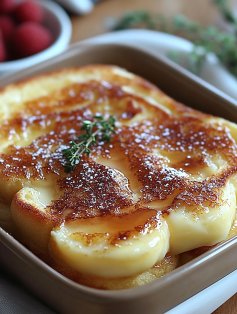
Réveillez-vous avec un délice magiquement croustillant et crémeux
Vous est-il déjà arrivé de rêver de préparer un petit-déjeuner incroyablement décadent, digne d’un restaurant, sans le chaos du matin ? Moi, oui. En tant que maman qui adore recevoir pour le brunch du week-end mais qui chérit aussi son sommeil, découvrir la magie du pain perdu crème brûlée de nuit a été une véritable révélation. Imaginez : vous faites un peu de travail la veille, glissez un plat au frigo, et vous réveillez avec une cuisine embaumée par la vanille et les délices qui cuisent. Le meilleur ? Ce fameux dessus caramélisé, craquant et irrésistible, qui donne à tout le monde une impression de festin sophistiqué. C’est l’alliance ultime entre l’élégance du pain perdu et la praticité de la préparation à l’avance.
La douce histoire derrière la star de votre brunch
Ce plat est un savant mélange de deux grands classiques. Le pain perdu, ou « pain perdu », a des racines dans la Rome antique, où il servait à utiliser le pain rassis de façon ingénieuse. La crème brûlée, avec sa luxueuse crème et sa coque de caramel dur, est une icône du dessert français. Un génial cuisinier maison s’est un jour dit : « Et si on les combinait ? ». Et heureusement qu’il l’a fait ! La version moderne de nuit témoigne de notre amour pour la saveur et la préparation intelligente. Elle prend le cœur riche et crémeux du pain perdu et le couronne de cette célèbre croûte craquante brûlée. C’est la tradition et l’innovation réunies en un seul plat parfait.
Pourquoi vous allez adorer cette recette
Laissez-moi vous compter les raisons ! Premièrement, la saveur est incroyable. La brioche s’imprègne d’une crème à la vanille riche, devenant d’une tendreté inimitable. Ensuite, ce dessus sucré se caramélise en une coque brillante et croustillante qui se brise sous la fourchette. Deuxièmement, c’est incroyablement facile. La partie la plus difficile est de penser à le préparer la veille — et même cela est simple. Enfin, cela fait sensation. Servir ce plat donne l’impression d’avoir réussi un tour de magie culinaire. On dirait que vous y avez passé des heures, mais votre secret est bien gardé avec moi. C’est ma recette fétiche pour transformer des matinées ordinaires en célébration.
Les occasions parfaites pour ce pain perdu
Ce plat ravit toujours les foules pour tout rassemblement où vous voulez impressionner sans stress.
- Brunch de fêtes : Pâques, la Fête des Mères, ou le matin de Noël. Il cuit pendant que vous ouvrez les cadeaux !
- Invités à la maison : Accueillez amis et famille avec un premier petit-déjeuner spectaculaire.
- Repas partagés : Transportez-le facilement et regardez-le devenir la star de la table.
- Petit plaisir du week-end : Parfois, votre propre famille mérite un samedi chic.
Rassembler vos ingrédients
Utiliser des ingrédients simples et de qualité est la clé du succès de cette recette.
- Pain de brioche : Tranchez-en assez pour remplir votre plat. Sa richesse beurrée est non négociable pour la meilleure texture.
- Œufs : 6 gros. Ils forment la base de notre crème luxueuse.
- Lait & Crème liquide entière : 1 verre (environ 250 ml) de chaque. Ce duo crée un liquide de trempage riche et soyeux.
- Sucre : ½ verre (environ 100 g). Sucre parfaitement la crème.
- Extrait de vanille : 1 cuillère à café. Utilisez du vrai pour le meilleur arôme.
- Cassonade : ½ verre (environ 100 g). C’est pour le dessus magique et caramélisé façon brûlée.
- Sel : ½ cuillère à café. Une pincée équilibre toute la douceur.
- Garnitures optionnelles : Fruits rouges frais, sucre glace ou sirop d’érable pour servir.
Substitutions faciles d’ingrédients
Pas de brioche ? Pas de problème ! La vie est ainsi, et voici comment adapter.
- Pain : Le challah, la baguette ou un bon pain blanc en tranches épaisses fonctionnent bien.
- Produits laitiers : Utilisez uniquement du lait entier au lieu du mélange crème-lait pour une version un peu plus légère. Pour une option sans lactose, le lait d’amande ou d’avoine non sucré peut convenir, mais la crème sera moins riche.
- Sucre : Vous pouvez utiliser uniquement du sucre blanc dans la crème. Pour le dessus, le sucre de coco caramélisera mais aura une saveur plus prononcée.
Votre guide étape par étape pour le pain perdu crème brûlée de nuit
Étape 1 : Préparer la crème onirique
Prenez votre plus grand saladier. Cassez-y les six œufs, en regardant leurs jaunes dorés tomber. Versez le lait et la crème liquide — c’est ce qui rend la crème si luxueusement riche. Ajoutez le sucre, la vanille et cette importante pincée de sel. Maintenant, prenez votre fouet et commencez à mélanger. Vous verrez le mélange se transformer d’ingrédients séparés en un liquide lisse et jaune pâle. Continuez à fouetter jusqu’à ce que tout soit complètement combiné et que vous ne voyiez plus de traces de blanc d’œuf. Le parfum de vanille commencera à emplir votre cuisine. Astuce de pro : Fouettez soigneusement mais pas trop vigoureusement ; nous ne voulons pas incorporer trop d’air, juste obtenir un mélange lisse.
Étape 2 : Le trempage de nuit
Prenez votre plat à gratin préféré (un plat de 23×33 cm environ est parfait) et beurrez-le généreusement ou vaporisez-y un peu d’huile. Cela évite tout collage désastreux. Maintenant, arrangez avec soin vos tranches de brioche dans le plat. Elles peuvent légèrement se chevaucher comme des ardoises — cela aide à ce que chaque bouchée reste moelleuse. Lentement et uniformément, versez votre mélange de crème sur tout le pain. Utilisez une spatule pour presser doucement sur les tranches qui dépassent, en vous assurant qu’elles soient bien baptisées dans la crème. Le pain commencera avidement à l’absorber. Couvrez le plat hermétiquement avec du film alimentaire. C’est le moment crucial ! Glissez-le au réfrigérateur et laissez la magie opérer toute la nuit. Le pain boira chaque goutte, devenant doux comme un pudding à l’intérieur.
Étape 3 : La cuisson vers la perfection dorée
Bonjour ! Sortez le plat du frigo environ 15 minutes avant la cuisson. Cela aide à une cuisson plus uniforme. Préchauffez votre four à 175°C (350°F). Retirez le film alimentaire — vous verrez que le pain est gonflé et a absorbé presque toute la crème. Placez le plat dans le four chauffé, sans couvercle. Enfournez pour 30 à 40 minutes. Vous devez obtenir un dessus magnifiquement doré et gonflé, et un centre bien pris. Un couteau inséré doit ressortir propre. L’odeur sera absolument divine.
Étape 4 : Créer la magie brûlée
C’est la partie amusante ! Sortez soigneusement le pain perdu cuit du four. Activez votre fonction grill (ou « broil ») sur puissance haute. Saupoudrez la cassonade uniformément sur toute la surface. Elle doit ressembler à une fine couverture sablonneuse. Placez le plat sous le grill. Maintenant, ne vous éloignez pas. Surveillez-le comme le lait sur le feu. En seulement 2 à 3 minutes, le sucre fondra, formera des bulles et se transformera en une croûte de caramel brillante, foncée et dure. Le son de son crépitement en refroidissant est une pure joie. Astuce du chef : Pour une touche encore plus pro, utilisez un chalumeau de cuisine pour caraméliser le sucre par endroits si vous préférez plus de contrôle.
Étape 5 : La grande finale : le service
Laissez reposer le plat juste une minute après le grill — le dessus sucré a besoin d’un instant pour durcir. Ensuite, utilisez une spatule tranchante pour découper et servir les portions. Le dessus va craquer magnifiquement. Servez-le tiède dans les assiettes. C’est là que vous pouvez personnaliser : une nuée de sucre glace, une poignée de framboises ou de myrtilles éclatantes, ou un petit filet de sirop d’érable. Le contraste entre le pain perdu chaud et crémeux, les fruits froids et le sucre croustillant est ce qui rend ce pain perdu crème brûlée de nuit absolument inoubliable.
Votre décompte du temps pour la recette
Planifions votre réussite !
- Temps de préparation : 15 minutes (surtout fouetter et arranger).
- Temps de repos au frais : 8 heures minimum (toute la nuit est parfait).
- Temps de cuisson : 30-40 minutes.
- Temps sous le grill : 2-3 minutes.
- Temps total (sans surveillance) : Environ 9 heures du début à la fin, avec seulement 45 minutes de travail actif.
Le secret du chef pour une saveur ultime
Mon astuce numéro un ? Ajoutez une petite touche de liqueur d’orange comme du Grand Marnier ou une cuillère à café de zeste d’orange dans la crème. La subtile note d’agrume tranche la richesse et complète la vanille et le caramel d’une façon qui fera dire à vos invités : « C’est quoi cette saveur incroyable ? ». C’est une simple touche qui élève le plat entier de « très bon » à « extraordinaire ».
Un fait amusant sur la brioche
Ce beau pain beurré que vous utilisez est souvent appelé une « Viennoiserie » en France. Cela le place dans la même famille que les croissants et les pâtisseries, et non le pain ordinaire ! Sa haute teneur en œufs et en beurre est exactement ce qui lui permet d’absorber la crème sans se défaire, créant cette texture fondante que nous aimons.
L’équipement dont vous aurez besoin
- Un grand saladier et un fouet
- Un plat à gratin d’environ 23×33 cm (ou similaire)
- Du film alimentaire
- Des verres et cuillères de mesure
- Une spatule pour servir
- Un four et une fonction grill (ou un chalumeau de cuisine pour s’amuser)
Conserver votre chef-d’œuvre (s’il en reste)
Si par miracle il en reste, laissez refroidir complètement. Couvrez le plat hermétiquement avec du film alimentaire ou transférez les portions dans un contenant hermétique. Conservez au réfrigérateur jusqu’à 2 jours. La crème à l’intérieur le gardera moelleux.
Pour le réchauffer, je ne recommande pas le micro-ondes car il ramollirait le dessus brûlée. Placez plutôt les portions sur une plaque et réchauffez-les dans un four à 150°C (300°F) pendant environ 10 minutes. Cela aide à retrouver un peu de croustillant.
La congélation est possible mais change la texture. Congelez les portions cuites et refroidies sur une plaque, puis transférez-les dans un sac de congélation. Réchauffez depuis congelé au four. Note : le dessus ne sera plus aussi croustillant, mais la saveur sera toujours délicieuse.
Mes meilleurs conseils et astuces
- Âge du pain : Une brioche légèrement rassie (1-2 jours) absorbe en fait mieux la crème sans devenir de la bouillie.
- Trempage uniforme : Appuyez sur le pain après avoir versé la crème. Vérifiez après 10 minutes et appuyez à nouveau si nécessaire.
- Surveillance du grill : Je le répète ! Restez près du four. Le sucre passe de parfait à brûlé en quelques secondes.
- Le repos : Laissez reposer 5-10 minutes après la cuisson. Cela permet à la crème de bien se fixer pour des tranches plus nettes.
Idées de présentation pour épater vos invités
- Servez dans des assiettes individuelles avec une feuille de menthe et un zigzag de coulis de fruits rouges.
- Pour un buffet, laissez-le dans le plat à gratin et laissez les invités se servir. Placez les garnitures dans de petits bols à côté.
- Saupoudrez de poudre d’or comestible ou de sucre à la lavande juste avant de servir pour une touche vraiment spéciale.
- Servez avec un côté de mascarpone fouetté au lieu de la crème chantilly classique.
6 Délicieuses variations du classique
Vous aimez cette recette ? Essayez ces variations amusantes pour changer !
- Bonheur Chocolat-Noisette : Ajoutez ¼ de verre (environ 75g) de pâte à tartiner aux noisettes dans la crème tiède et fouettez jusqu’à ce que ce soit mélangé. Parsemez de noisettes hachées et grillées après le passage au grill.
- Roulé Pomme-Cannelle : Intercalez des fines tranches de pommes et une pincée de cannelle entre les tranches de pain. Utilisez un mélange sucre-cannelle pour le dessus brûlée.
- Échappée Tropicale : Ajoutez ½ verre (environ 125 ml) de lait de coco à la crème et utilisez du challah. Parsemez de noix de coco râpée grillée et de tranches de mangue.
- Pumpkin Spice : Mélangez ½ verre (environ 125g) de purée de potiron et une cuillère à café d’épices pour tarte à la citrouille dans la crème. C’est parfait pour les matins d’automne.
- Extase aux Fruits Rouges : Éparpillez une couche de fruits rouges frais ou surgelés (comme des myrtilles ou des framboises) dans le plat avant d’ajouter le pain. Ils éclateront et créeront une couche fruitée.
- Bacon-Érable Salé-Sucré : Émiettez du bacon cuit dans la crème. Utilisez du sirop d’érable dans la crème à la place du sucre, et recouvrez d’un mélange cassonade-sirop d’érable.
Si vous adorez les desserts à base de crème cuite au four, vous devez essayer ma recette d’authentiques pastéis de Belém portugais. Elles ont le même cœur crémeux mais dans une coque de pâte feuilletée. Pour un autre dessert impressionnant à préparer à l’avance, ce Cobbler à la noix de pécan fait toujours sensation. Et si le chocolat est votre langage d’amour, mon Gâteau au Chocolat Facile et mon délicieux Gâteau Bundt Brownie au Chocolat sont des must absolus.
Erreurs courantes à éviter
Erreur 1 : Utiliser du pain tout frais et très moelleux
C’est une erreur fréquente ! Quand vous utilisez un pain trop frais et aéré, il peut se transformer en bouillie dans la crème pendant la nuit. Il manque de structure pour tenir pendant le long trempage. Le résultat peut être une texture détrempée et peu appétissante au lieu d’une bouchée ferme et riche en crème. Pour éviter cela, utilisez du pain vieux d’un jour ou deux. Si vous n’avez que de la brioche fraîche, vous pouvez légèrement toaster les tranches au four d’abord pour les sécher un peu. Cela leur donne le pouvoir d’absorption parfait sans qu’elles s’affaissent.
Erreur 2 : Ne pas laisser tremper assez longtemps
Le « de nuit » dans le titre est là pour une raison. Brusquer le temps de trempage mène à coup sûr à la déception. Si le pain n’a pas ses 8 heures pleines pour absorber la crème, le centre sera sec et prendra un goût d’œuf, tandis que l’extérieur sera trop détrempé. La magie opère lentement au frigo. Le pain se transforme complètement, devenant uniformément tendre et semblable à un pudding. Anticipez ! Les quelques minutes de préparation la veille garantissent un résultat sans stress et parfait au réveil.
Erreur 3 : S’éloigner pendant le grill
C’est la raison numéro un des incendies de cuisine et des dessus ratés. La cassonade sous une chaleur intense peut passer de parfaitement caramélisée à un désastre noirci et amer en littéralement 10 secondes. C’est plus rapide que de vérifier votre téléphone. Restez toujours devant le four, la lumière allumée. Surveillez jusqu’à ce que le sucre fonde, forme des bulles uniformément et prenne une couleur ambrée foncée. Dès qu’il semble prêt, sortez-le. Votre vigilance est la seule chose qui sépare votre dessert de cette croûte brûlée parfaite et craquante.
Erreur 4 : Oublier le sel
Cela peut sembler un ingrédient minuscule, mais oublier le sel donne un plat unidimensionnel et trop sucré. Le sel est un exhausteur de goût. Il ne rend pas les choses salées ; il fait ressortir la vanille, équilibre la richesse de la crème et des œufs, et rehausse les notes de caramel du dessus. Sans lui, votre pain perdu peut avoir un goût plat et écœurant. Ajoutez toujours cette demi-cuillère à café. C’est l’arme secrète qui fait chanter toutes les autres saveurs en harmonie.
Une note sur les ingrédients de qualité
Utiliser les meilleurs ingrédients auxquels vous avez accès fait vraiment une différence en termes de saveur et de sécurité alimentaire. Pour des conseils sur le choix et la conservation des produits laitiers et des œufs afin que vos plats soient à la fois délicieux et sûrs, le guide des bonnes pratiques alimentaires du gouvernement français est une ressource utile pour tout cuisinier maison.
Ce pain perdu crème brûlée de nuit n’est qu’un exemple de la façon dont une excellente recette préparée à l’avance peut transformer vos repas. Pour plus d’inspiration sur les gâteaux et pâtisseries parfaits pour toute occasion, explorez ma collection complète de recettes de gâteaux et pâtisseries.
Vos questions sur le pain perdu crème brûlée de nuit, répondues
Puis-je faire cette recette sans trempage de nuit ?
Techniquement, oui, mais vous perdrez la texture et la profondeur de saveur caractéristiques. Un trempage minimum de 4 heures est essentiel pour que la crème pénètre bien le pain. Un trempage rapide de 30 minutes laissera un extérieur détrempé et un centre sec et brioché. Le processus de nuit permet à la crème d’hydrater chaque miette, donnant un intérieur uniformément doux et riche, presque comme un pudding au pain. Pour la meilleure expérience, je recommande fortement de prévoir le repos complet de nuit. C’est la clé de la magie matinale « sans tracas » !
Que puis-je utiliser à la place de la brioche ?
La brioche est idéale pour son goût beurré et sa texture solide mais moelleuse, mais d’autres pains fonctionnent bien en cas de besoin. Le challah est un substitut fantastique avec une richesse similaire. Une bonne baguette épaisse ou un pain de mie de qualité marche aussi — assurez-vous juste que les tranches fassent au moins 2,5 cm d’épaisseur. Évitez le pain de mie pré-tranché très moelleux et fin, car il se désintégrerait. Du pain légèrement rassis, de n’importe quel type, fonctionne en réalité mieux que du pain frais, car il absorbe la crème plus avidement sans se défaire.
Mon dessus a brûlé sous le grill. Qu’ai-je fait de mal ?
Cela arrive généralement parce que le grill était trop chaud, le plat était trop près de l’élément chauffant, ou on l’a laissé sans surveillance ne serait-ce qu’un instant. Les grills de four peuvent varier énormément en intensité. La prochaine fois, essayez de positionner la grille au milieu du four, et non en haut, pour le grillage. Surveillez-le constamment dès que vous l’enfournez. Si votre grill est très puissant, vous pourriez même essayer un réglage moins puissant si vous en avez un. Le sucre devrait se caraméliser en 2-4 minutes. S’il ne dore pas après 2 minutes, votre grille est peut-être trop basse.
Puis-je préparer ce plat complètement à l’avance et le congeler ?
Vous pouvez, mais avec quelques réserves sur la texture. La meilleure méthode est de cuire complètement le pain perdu, de le laisser refroidir, puis de le congeler en portions (sans le dessus brûlée). Enveloppez bien les tranches dans du film alimentaire puis du papier aluminium. Pour servir, décongelez une nuit au frigo, réchauffez au four à 150°C jusqu’à ce qu’elles soient tièdes, puis ajoutez la cassonade et passez au grill. Congeler le pain trempé non cuit n’est pas recommandé, car la crème peut séparer. Congeler après le grillage rendra le beau dessus croustillant tout mou.
Comment savoir si le pain perdu est bien cuit ?
Cherchez des indices visuels et tactiles. Le dessus doit être d’un brun doré foncé et bien gonflé. Le centre doit sembler pris, pas tremblotant comme du liquide. Le test le plus fiable est d’insérer un couteau fin ou un cure-dent au centre. Il doit ressortir propre, sans trace de crème liquide ou œuf battu. S’il ressort humide, cuisez encore 5 minutes et vérifiez à nouveau. Il continuera à se fixer un peu en refroidissant, donc ne le faites pas trop cuire jusqu’à ce qu’il soit complètement dur.
Puis-je utiliser un autre sucre pour le dessus brûlée ?
Absolument, mais les résultats varieront. Le sucre blanc granulé fonctionne et crée un caramel classique et transparent. La cassonade (blonde ou brune) ajoute une saveur et une couleur plus profondes de mélasse, ce que j’adore. Le sucre roux ou turbinado vous donnera un dessus plus croustillant et cristallin. Le sucre de coco caramélisera mais a une saveur distincte. Évitez le sucre glace, car il contient de l’amidon de maïs et ne caramélisera pas correctement — il risque juste de fondre et brûler.
Y a-t-il un moyen de rendre cette recette moins riche ?
Oui, vous pouvez l’alléger un peu, bien que cela modifie le profil décadent classique. Vous pouvez remplacer la crème liquide entière par une quantité égale de lait entier. Utiliser du lait demi-écrémé pour la totalité du liquide la rendra nettement plus légère, mais la crème sera moins onctueuse. Vous pouvez aussi réduire le sucre total dans la crème de quelques cuillères à soupe. Le pain est le facteur principal, donc utiliser un pain moins riche comme du challah ou de la baguette au lieu de la brioche aide aussi.
Quelle taille de plat à gratin dois-je utiliser ?
Un plat à gratin standard de 23×33 cm environ est parfait pour cette recette. Il accueille confortablement environ 12 tranches de brioche standard. Si vous utilisez un plat plus petit ou plus grand, cela affectera le temps de cuisson. Dans un plat plus petit et plus profond, le centre mettra plus de temps à prendre. Dans un plat plus large et moins profond, il cuira plus vite et pourrait sécher plus facilement. Le but est d’avoir le pain arrangé en une seule couche bien serrée d’environ 3,5 à 5 cm de profondeur une fois la crème ajoutée.
Puis-je faire des portions individuelles ?
Vous pouvez absolument, et c’est très joli pour la présentation ! Utilisez un moule à muffins ou des ramequins individuels. Beurrez légèrement chaque compartiment. Coupez ou déchirez la brioche en petits cubes. Répartissez les cubes dans les moules. Versez la crème dessus, en appuyant doucement. Couvrez et réfrigérez une nuit. Cuisez à la même température, mais moins longtemps — commencez à vérifier à 20-25 minutes. Vous pouvez ensuite saupoudrer du sucre sur chaque portion et utiliser un chalumeau de cuisine pour les caraméliser individuellement.
Pourquoi ma crème ne s’est-elle pas imprégnée uniformément ?
Cela arrive généralement si le pain n’a pas été pressé dans la crème ou si les tranches étaient trop tassées. Après avoir versé la crème, utilisez vos mains propres ou une spatule pour appuyer doucement sur chaque tranche, en vous assurant qu’elle soit immergée. Vérifiez après 15 minutes au frigo et appuyez à nouveau — le pain aura absorbé du liquide, et vous pourriez trouver quelques endroits secs. Assurez-vous aussi que vos tranches soient arrangées de manière compacte mais pas écrasées les unes contre les autres, ce qui peut créer des poches sèches au milieu.
La dernière tranche
Ce pain perdu crème brûlée de nuit est plus qu’une simple recette. C’est la promesse d’une matinée douce et sucrée, et un sourire garanti autour de la table. Il réunit le réconfort du pain perdu, l’élégance du dessert et le génie de la préparation à l’avance en un seul plat glorieux. Essayez-le ce week-end. Préparez-le vendredi soir, et réveillez-vous avec votre nouvelle tradition brunch préférée. Croyez-moi, ce premier craquement à travers le caramel, révélant le pain crémeux parfumé à la vanille, est un pur moment de bonheur culinaire. Bonne cuisine, et savourez chaque délicieuse bouchée !
Equipment
- Grand bol de mélange
- Plat de cuisson de 9x13 pouces
- Fouet
- Spatule pour servir
- Film plastique
Ingrédients
- 12 tranches Pain brioché utilisez du pain légèrement rassis pour un meilleur résultat.
- 6 grands Œufs
- 1 tasse Lait
- 1 tasse Crème épaisse
- ½ tasse Sucre
- 1 cuillère à café Extrait de vanille
- ½ tasse Sucre brun
- ½ cuillère à café Sel
Instructions
- Dans un grand bol, battre les œufs, le lait, la crème, le sucre, l'extrait de vanille et le sel jusqu'à obtenir un mélange lisse.
- Beurrer un plat de cuisson de 9x13 pouces et disposer les tranches de pain brioché.
- Verser le mélange de custard uniformément sur le pain, en appuyant légèrement pour bien tout imbiber.
- Couvrir le plat de film plastique et réfrigérer pendant la nuit.
- Préchauffer le four à 350°F (175°C) environ 15 minutes avant la cuisson.
- Retirer le film plastique, puis enfourner et cuire pendant 30 à 40 minutes jusqu'à ce que le dessus soit doré et bien cuit.
- Saupoudrer de sucre brun et passer sous le gril pendant 2 à 3 minutes jusqu'à ce que le sucre caramélise.
- Laisser reposer une minute, puis couper en portions et servir chaud avec des garnitures au choix.
Notes
Nutrition

Je suis Céline, une véritable passionnée d’ustensiles et de matériel de cuisine ! J’adore tester, comparer et découvrir les meilleurs équipements pour rendre la cuisine plus efficace et agréable. Que ce soit un bon couteau, un robot performant ou une poêle incontournable, je suis toujours à la recherche des outils qui feront la différence. Mon but est de vous guider dans vos choix pour que vous ayez le bon matériel adapté à vos besoins.