

Gâteau Marbré avec une Crème au Beurre à la Vanille : Un Pur Moment de Joie
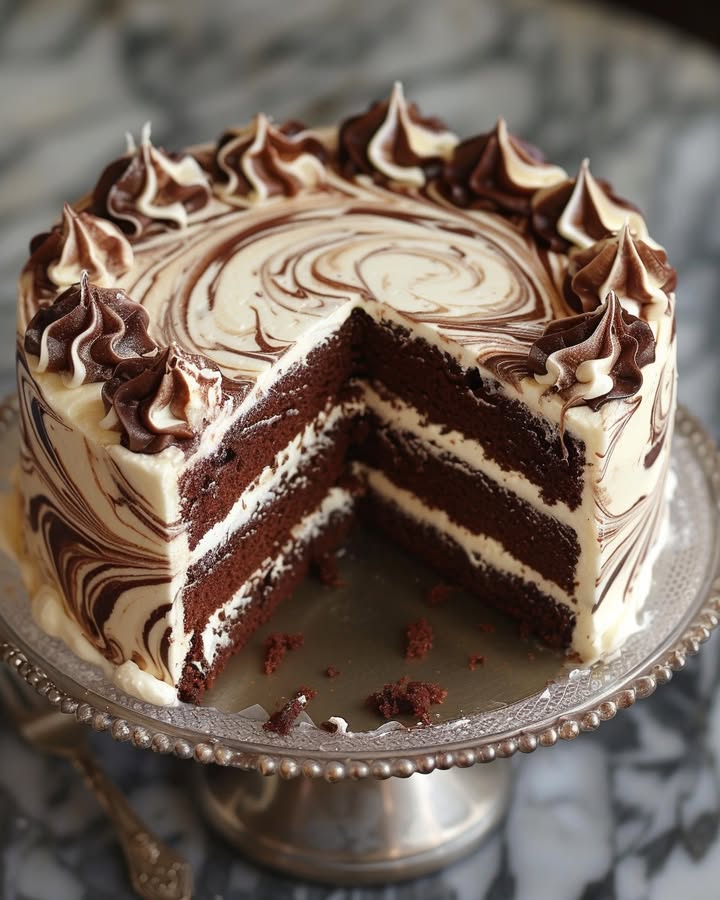
Il y a quelque chose magique à couper un gâteau marbré, n’est-ce pas ? On n’obtient jamais exactement le même motif. Pour moi, ce cake est la pure nostalgie. Il me rappelle les après-midi de samedi chez ma grand-mère, l’odeur du cacao et de la vanille qui emplissait sa cuisine douillette. J’ai perdu le compte du nombre de fois où j’ai testé ce Gâteau Marbré Délicieux, mais je vous le dis : la version que je partage aujourd’hui est la gagnante. Il est incroyablement moelleux, a le tourbillon parfait, et cette crème au beurre à la vanille ? C’est un rêve devenu réalité.
Un Petit Historique de cette Douceur Intemporelle
Le gâteau marbré, ou *Eischwerkuchen*, est apparu dans les livres de cuisine allemands au XIXe siècle. Sa beauté résidait dans son ingéniosité. Les boulangers pouvaient créer un cake à deux tons magnifique avec une seule pâte simple, un tour charmant à une époque où les ingrédients étaient précieux. Aujourd’hui, c’est un classique mondial. Des versions traditionnelles comme le stollen aux créations modernes et extravagantes, le **gâteau marbré** continue de fasciner. Ma recette mélange ce charme ancien avec une méthode infaillible et ultra-moelleuse qui garantie le succès à chaque fois. C’est une histoire de chocolat et vanille, magnifiquement entrelacés.
Pourquoi Vous Tomberez Amoureux de Cette Recette
Premièrement, elle est incroyablement tolérante ! La pâte est simple à mélanger. Deuxièmement, la saveur est imbattable. Le cake à la vanille est riche et tendre, tandis que le tourbillon chocolat est profondément fondant. Mais la vraie star pourrait être cette Crème au Beurre à la Vanille. Utiliser de la pâte de vanille véritable lui donne une qualité parfumée et pointillée que l’extrait ne peut égaler. Elle est onctueuse, pas trop sucrée, et la parfaite compagne du cake. De plus, elle est superbe avec ce glaçage chocolat coulant. Ce n’est pas juste un cake ; c’est une célébration dans une assiette.
Occasions Parfaites pour ce Cake Spectaculaire
Ce cake a été présenté pour toutes les occasions chez nous ! Il est parfait pour les anniversaires car il satisfait tous les goûts — les amoureux du chocolat et les fans de vanille se réunissent. J’adore le servir pour les dîners familiaux du weekend ; il transforme un simple repas en moment spécial. C’est aussi un choix fantastique pour les baby showers, les pots de bienvenue, ou comme un cadeau « juste parce que » pour égayer un ami. Honnêtement, chaque journée qui finit avec une part de ce gâteau marbré délicieux est une bonne journée.
Rassembler Vos Ingrédients
Utiliser des ingrédients à température ambiante est le secret pour une pâte homogène et lisse. Voici ce dont vous aurez besoin pour cette recette facile de gâteau marbré.
Pour le Gâteau Marbré:
- 2 cups + 1/4 cup (240g + 30g) de farine tout usage, à mesurer avec une cuillère et à niveler
- 1 Tbsp (14g) de levure chimique (baking powder)
- 1/2 tsp de sel
- 1/4 cup (56g) de beurre non salé, à température ambiante
- 1 cup (200g) de sucre granulé
- 1/2 cup (100g) de sucre brun léger, légèrement compacté
- 1/2 cup (118mL) d’huile de colza (canola)
- 3 gros œufs, à température ambiante
- 3/4 cup (170g) de crème épaisse (sour cream), à température ambiante
- 1 tsp d’extrait de vanille
- 3/4 cup (177mL) de lait, à température ambiante
- 1/3 cup (26g) de cacao en poudre non sucré
Pour la Crème au Beurre à la Vanille:
- 1 cup (227g) de beurre non salé, à température ambiante
- Une pincée de sel
- 4 cups (420g) de sucre en poudre (powdered sugar), à mesurer avec une cuillère et à niveler
- 2-4 Tbsp (30-60mL) de crème fleurette (heavy whipping cream)
- 2 tsp (8g) de pâte de vanille (vanilla bean paste)
Pour le Glaçage Chocolat (Ganache):
- 1 cup (6 oz) de pépites de chocolat noir
- 1/2 cup (118mL) de crème fleurette (heavy cream)
Substitutions Pratiques d’Ingrédients
Pas de crème épaisse ? Utilisez du yaourt nature entier. Pas d’huile de colza ? Toute huile neutre comme l’huile végétale ou de tournesol marche. Pour la crème au beurre, vous pouvez utiliser 2 cuillères à soupe d’extrait de vanille pur au lieu de la pâte, mais vous perdrez ces jolis points. Si vous n’avez pas de crème fleurette pour le glaçage, la crème de coco entière est une excellente alternative sans lactose qui ajoute une subtile saveur. Souvenez-vous, la cuisine est une question d’adaptation avec ce que vous avez !
Comment Réaliser votre Chef-d’œuvre de Gâteau Marbré
C’est parti pour cuisiner ! Libérez un peu de comptoir, mettez de la musique, et préparez-vous à créer quelque chose de beau. Suivez ces étapes faciles pour un gâteau marbré parfait et moelleux.
Étape 1 : Préparer et Mélanger les Ingrédients Secs
Commencez par préchauffer votre four à 350°F (177°C) pour convection ou 325°F (162°C) pour un four conventionnel. Graissez et chemisez trois moules à cake de 6-inch avec du papier sulfurisé. Cela garantit un démoulage facile ensuite. Dans un saladier moyen, mélangez avec un fouet 2 cups (240g) de votre farine, la levure chimique et le sel. Ce fouettage aère les ingrédients secs, ce qui aide notre cake à lever uniformément. Mettez de côté ce nuage parfumé de farine pour le moment. Astuce pro : Mesurez votre farine en la versant avec une cuillère dans la cup et en nivelant. Ne la « scoopez » pas ! Scooper tasse la farine et donne un cake dense.
Étape 2 : Crémer les Sucres et Construire la Pâte
Dans votre mixeur avec l’attache fouet, battez le beurre ramolli, le sucre granulé et le sucre brun à vitesse moyenne-haute pendant 1-2 minutes. Cela ressemblera à du sable humide. Maintenant, versez l’huile de colza et laissez le mixeur tourner pendant encore une minute complète. Le mélange deviendra pale, épais et crémeux. Cette étape est cruciale pour la texture. Ajoutez ensuite les œufs un par un, laissant chacun s’intégrer complètement avant d’ajouter le suivant. La pâte deviendra glorieusement brillante. Nettoyez le bord du bol, puis incorporez la crème épaisse et l’extrait de vanille.
Étape 3 : Finir la Pâte et Créer le Tourbillon
À vitesse basse du mixeur, ajoutez la moitié de votre mélange de farine. Une fois qu’il est juste combiné, versez tout le lait. Quand le lait a disparu, ajoutez le reste de la farine. Mélangez à vitesse moyenne juste jusqu’à ne voir plus de traces blanches. Divisez maintenant la pâte équitablement entre deux saladiers. Dans un saladier, fouettez la farine réservée de 1/4 cup (30g). Dans l’autre, fouettez le cacao en poudre. Vous aurez un saladier de belle pâte vanille et un de riche pâte chocolat foncée.
Étape 4 : La Partie Amusante – Marbrer !
C’est là que la magie opère. Utilisant deux cuillères ou une cuillère à cookie, déposez des boules alternées des pâtes vanille et chocolat dans vos moules préparés. Ne vous inquiétez pas de la précision ! Une fois toute la pâte dedans, prenez un cure-dent, une brochette ou un couteau fin. Tourbillonnez-le doucement dans la pâte en mouvements en huit ou circulaires. Ne le faites pas trop, ou vous perdrez le beau contraste. Juste 4-5 tourbillons par moule est parfait.
Étape 5 : Cuire et Laisser Refroidir
Placez vos moules au centre du four préchauffé. Cuisez environ 35 minutes. Les cakes sont cuits quand ils rebondissent légèrement au toucher et qu’un cure-dent inséré en sort avec quelques miettes humides. Laissez-les refroidir dans les moules 10 minutes, puis démoulez-les sur une grille pour qu’ils refroidissent complètement. La patience est clé ici ! Glacé un cake encore tiède est une recette pour un désordre fondant et glissant.
Étape 6 : Préparer la Crème et le Glaçage
Pour la crème au beurre, battez le beurre à température ambiante dans un bol de mixeur propre pendant 1-2 minutes jusqu’à qu’il soit pale. Ajoutez le sel et le sucre en poudre, démarrez à basse vitesse (pour éviter une tempête de sucre !), puis battez à vitesse moyenne-haute pendant au moins 5 minutes. Il deviendra incroyablement léger et aéré. Ajoutez la pâte de vanille et 2 cuillères à soupe de crème fleurette. Battez 2 minutes supplémentaires. Si elle semble trop molle, mettez-la au frigo 10-15 minutes. Pour le glaçage chocolat, versez la crème fleurette chaude frémissante sur les pépites de chocolat, couvrez 2 minutes, puis mélangez jusqu’à être soyeux et homogène. Laissez-le refroidir légèrement jusqu’à une consistance coulable.
Étape 7 : Assembler et Décorer
Si vos étages de cake ont un dôme, égalisez-les avec un couteau dentelé. Placez votre premier étage sur un plat ou support à cake. Étalez un quart de la crème au beurre, puis versez un quart du glaçage chocolat. Répétez avec le deuxième étage. Mettez le dernier étage de cake dessus, puis faites un « crumb coat » : étalez une fine couche de crème au beurre sur tout le cake pour sceller les miettes. Mettez au frigo 15-20 minutes. Finalement, glacez le cake avec la crème au beurre restante. Réchauffez le glaçage chocolat 10 secondes, puis versez-le sur le dessus, encouragant des coulures sur les côtés. Astuce du chef : Utilisez une spatule offset pour glacer et un couteau de pâtissier pour les côtés lisses. C’est plus facile qu’il y paraît !
Investissement en Temps
Les bonnes choses prennent du temps, mais ce cake est tout à fait faisable ! Temps de Préparation : 30 minutes. Temps de Cuisson : 35 minutes. Temps de Refroidissement & Glaçage : 1 heure. Temps Total : Environ 2 heures, 5 minutes. Le temps actif est minimal, et les résultats impressionnants sont si gratifiants.
Mon Secret pour le Tourbillon Ultime
Le truc pour un tourbillon parfait est dans la consistance de la pâte. Si votre pâte chocolat semble plus épaisse que la vanille après ajout du cacao, incorporez juste une ou deux cuillères à café de lait. Vous voulez que les deux pâtes ont une « pesanteur » similaire pour qu’ils maintiennent leur propre forme quand tourbillonnés. Une pâte équilibrée signifie un motif marbré net et beau dans chaque part.
Un fait Amusant sur le Marbré
Saviez-vous que le terme « marble cake » fut utilisé en anglais pour la première fois dans un livre de cuisine de 1859 ? Mais la technique est beaucoup plus ancienne. C’est un fantastique exemple de créativité culinaire, transformant une simple erreur (deux pâtes mélangées accidentellement) en un design intentionnel et aimé. Cela prouve que parfois les meilleures recettes viennent de accidents heureux !
Équipement Essentiel dont Vous Avez Besoin
- Trois moules à cake rond de 6-inch
- Mixeur sur pied ou mixeur main
- Saladiers (moyen et grand)
- Fouet et spatule en caoutchouc
- Cure-dent ou testeur de cake
- Grille de refroidissement
- Spatule offset et couteau de pâtissier (pour une finition pro)
- Petite casserole pour la ganache
Comment Stocker votre Chef-d’œuvre
À Température Ambiante : Si vous planifiez le manger dans 1-2 jours, vous pouvez le garder couvert avec un dôme à cake ou un grand bol sur le comptoir. La crème au beurre scelle magnifiquement l’humidité.
Dans le Réfrigérateur : Pour une fraîcheur plus longue, stockez le cake dans un contenant hermétique au frigo jusqu’à 4 jours. Les saveurs s’intensifient même. Laissez-le reposer hors du frigo 30 minutes avant de servir pour ramollir la crème au beurre.
Dans le Congélateur : Ce cake congèle merveilleusement ! Emballez bien les étages non glacés dans du film alimentaire, puis dans du papier aluminium. Congelez jusqu’à 3 mois. Dégagez au réfrigérateur pendant la nuit avant de glacer. Vous pouvez aussi congeler le cake complètement assemblé et glacé. Congelez-le sur une plaque jusqu’à qu’il soit solide, puis emballez-le bien. Dégagez au frigo pendant la nuit.
Astuces pour un Succès Garanti
- Température Ambiante est Clé : Je ne peux le souligner assez. Les ingrédients froids ne se mélangent pas bien, donnant un cake dense ou une crème au beurre séparée.
- Ne Pas Trop Mélanger : Une fois vous ajoutez la farine, mélangez juste jusqu’à combiné. Trop mélanger développe le gluten et rend le cake dur.
- Refroidir Complètement : Les étages de cake tièdes feront fondre votre glaçage et transformeront l’assemblage en une épreuve glissante.
- Goûtez votre Cacao : Utilisez un cacao en poudre non sucré de bonne qualité pour la meilleure saveur chocolat.
Idées de Présentation pour Épater vos Invités
Comment vous le servez est partie du plaisir ! Essayez décorer le dessus avec des baies fraîches, des fleurs comestibles, ou des copeaux de chocolat. Pour un look festif, faites de petites rosettes de crème au beurre autour du bord supérieur. Vous pouvez aussi servir chaque part avec un nuage de crème chantilly et une pincée de cacao en poudre. Sur un jour chaud, une boule de glace vanille accompagnant ce gâteau marbré délicieux est simplement paradisiaque.
Autres Recettes de Cake Incroyables à Essayer
Si vous avez aimé cette recette, notre section dessert est remplie de winners ! Pour une option sans cuisson, vous devrez essayer ce cheesecake marbré chocolat et vanille incroyablement crémeux, où les saveurs fusionnent parfaitement au frigo. Durant les vacances, un rich et moelleux cake aux fruits est toujours un plaisir pour la foule. Pour quelque chose léger et citronné, un simple flan crèmeux citron est surprenamment élégant. Et quand les fraises sont de saison, ce cake fraises rafraîchissant est absolument à faire. Vous pouvez trouver une inspiration infinie dans notre collection de recettes de gateaux et patisseries délicieux.
Erreurs Communes à Éviter
Erreur 1 : Mesurer la Farine Incorrectement
L’erreur de cake le plus commune est de scoop la farine directement du sac avec la cup de mesure. Cela tasse la farine, ajoutant beaucoup plus que la recette demande. Votre cake sera sec et dense. Toujours versez la farine doucement avec une cuillère dans votre cup de mesure. Puis, utilisez le bord plat d’un couteau pour niveler. Cette méthode « spoon and level » change tout pour la constance en cuisine.
Erreur 2 : Tourbillonner les Pâtes Trop
C’est tellement tentant de continuer tourbillonnant pour créer un motif ! Mais si vous le faites trop, les pâtes vanille et chocolat se mélangeront en une seule couleur terne. Vous perdrez le beau, distinct effet marbré. Tirez doucement votre cure-dent dans les pâtes juste 4-5 fois par moule. Une main légère vous donne ces tourbillons magnifiques et instagramables.
Erreur 3 : Glacer un Cake encore Tiède
L’impatience mène à des glissements — littéralement. Si vos étages de cake sont même légèrement tièdes, la crème au beurre fondra, glissera et sera absorbée dans le cake. Cela crée un désordre gras et instable. Laissez vos cakes refroidir dans le moule pendant 10 minutes, puis transférez-les à une grille. Attendez jusqu’à qu’ils sont complètement froids au toucher avant même de penser à glacer. Votre patience sera récompensée avec un cake parfait et stable.
Erreur 4 : Utiliser du Beurre Froid pour la Crème
Le beurre froid ne se crème pas correctement avec le sucre. Vous finirez avec une crème au beurre grumeleuse, granuleuse et impossible à étaler lisse. Votre beurre devrait être à température ambiante fraîche — mou au point de laisser une empreinte quand vous le pressez, mais pas gras ou fondu. Sortez-le du frigo au moins une heure avant de commencer la cuisine pour une crème parfaite et soyeuse.
Questions Fréquemment Posées (FAQ)
Puis-je faire ce gâteau marbré dans une taille de moule différente ?
Absolument ! Vous pouvez le cuire dans deux moules de 8-inch. Les étages seront plus fins, donc le temps de cuisson sera légèrement moins, environ 25-30 minutes. Commencer vérifier la cuisson tôt. Pour un cake en plaque 9×13, la pâte va ajuster parfaitement. Cuisez 30-35 minutes, ou jusqu’à un cure-dent sort propre. Juste souvenez-vous d’ajuster le temps de cuisson et gardez un œil attentif. Le plus petit le moule, le plus épais l’étage et le plus long il prend à cuire.
Puis-je faire les étages du cake en avance ?
Oui, et je fais cela tout le temps ! Une fois les étages de cake refroidis complètement froids, enfermez-les bien dans du film alimentaire. Vous pouvez les stocker à température ambiante pendant la nuit, ou au réfrigérateur jusqu’à 2 jours. Pour stockage plus long, congelez-les jusqu’à 3 mois. Dégagez au réfrigérateur pendant la nuit avant de glacer. Cela rend jour de fête tellement moins stressant.
Ma crème au beurre est trop liquide. Comment je peux la rectifier ?
Ceci arrive généralement si votre beurre était trop mou ou si la cuisine est très chaude. Ne paniquez pas ! Premièrement, mettez le bol entier de glaçage au réfrigérateur pendant 15-20 minutes. Laissez le beurre durcir un peu. Puis, battez-le encore avec votre mixeur. Si elle est encore trop molle, vous pouvez ajouter avec précaution un peu plus de sucre en poudre tamisé, un quart de cup à chaque fois, jusqu’à qu’elle atteint la bonne consistance.
Quelle est la différence entre la pâte de vanille et l’extrait ?
L’extrait de vanille est un liquide fait par infusion de gousses de vanille dans l’alcool. La pâte de vanille est un sirop épais rempli de petites graines de vanille (les points !). Cela vous donne l’intense saveur des gousses et cette belle apparence pointillée. Vous pouvez utiliser 1:1 dans les recettes, mais la pâte donne une saveur plus forte et un look professionnel. C’est mon arme secrète pour les cakes spéciaux.
Puis-je utiliser du chocolat au lait pour la ganache ?
Vous pouvez, mais la texture sera différente. Le chocolat noir se fixe plus ferme parce qu’il a moins de matière grasse laitée et de sucre. Le chocolat au lait ou demi-sucré donnera une ganache plus molle, plus sucrée qui ne pourrait tenir sa forme coulante aussi bien. Si vous l’utilisez, vous devrez peut- mettre le cake au frigo plus longtemps pour que la ganache se fixe correctement. Je préfère le chocolat noir pour sa saveur riche et texture fiable.
Pourquoi mon cake a coulé au centre ?
Un centre coulant souvent signifie que le cake n’était pas complètement cuite, il y avait trop de levure (levure chimique), ou la porte du four était ouvert trop tôt. Assurez que votre levure chimique est fraîche. Testez la cuisson avec un cure-dent — il devrait sortir avec juste quelques miettes humides, pas de la pâte molle. Et résiste l’urge d’ouvrir la porte du four avant au moins la marque de 25 minutes !
Comment je peux faire cette recette avec du lait ribot (buttermilk) ?
Le lait ribot est un substitut fantastique pour le lait régulier. Son acidité fait une mie encore plus tendre. Usez la même quantité : 3/4 cup de lait ribot. Pas besoin de changer autre chose. La tang légère couple merveilleusement avec la crème au beurre sucrée et le chocolat riche.
La crème épaisse est nécessaire ? Que fait-elle ?
La crème épaisse est mon secret pour un cake ultra-moelleux. Son contenu de matière grasse ajoute richesse, et son acidité attendrit le gluten, résultant à une texture douce, veloutée qui reste moelleuse pour des jours. Si vous n’en avez pas, le yaourt nature entier est le meilleur substitut.
Puis-je colorer la pâte vanille pour un effet marbré différent ?
Quelle idée amusante ! Oui, absolument. Vous pouvez ajouter quelques gouttes de colorant alimentaire gel à la pâte vanille pour créer des tourbillons rose pastel, bleu, ou jaune avec le chocolat. Le colorant gel est meilleur car il ne change pas la consistance de la pâte. C’est une merveilleuse façon de personaliser le cake pour anniversaires ou vacances.
Quelle est la meilleure façon de couper un cake à étages proprement ?
Pour des parts parfaites en photo, utilisez un grand couteau aiguisé. Passer-le sous l’eau très chaude, essuyez-le, et faites votre coupe. La chaleur aide le couteau glisser lisse à travers le glaçage et le cake sans tirer. Essuyez et refaites chauffer le couteau entre chaque coupe pour des coupes les plus nettes à chaque fois.
Un Mot Doux Final
Cuire ce gâteau marbré est plus que suivre des étapes — c’est créer un moment de joie. Du premier sillage de cacao dans le four à la dernière coulure de ganache, c’est un travail d’amour. Je crois vraiment que les meilleurs repas, comme ce délicieux gâteau marbré, sont plus que du goût ; ils sont sur l’expérience partagée et la joie qu’un fait maison apporte. Souvenez-vous, une bonne cuisine est partie de construire habitudes alimentaires saines et équilibrées qui incluent célébrer les moments doux de la vie. Donc assemblez vos personnes, coupez ce beau cake, et savourez chaque dernière miette. Bonne cuisine !
Equipment
- Batteur sur socle ou batteur à main
- Trois moules à gâteau ronds de 15 cm
- Petite casserole pour la ganache
- Fouet et spatule en caoutchouc
- Cure-dent ou testeur de gâteau
Notes
Nutrition

Je suis Céline, une véritable passionnée d’ustensiles et de matériel de cuisine ! J’adore tester, comparer et découvrir les meilleurs équipements pour rendre la cuisine plus efficace et agréable. Que ce soit un bon couteau, un robot performant ou une poêle incontournable, je suis toujours à la recherche des outils qui feront la différence. Mon but est de vous guider dans vos choix pour que vous ayez le bon matériel adapté à vos besoins.